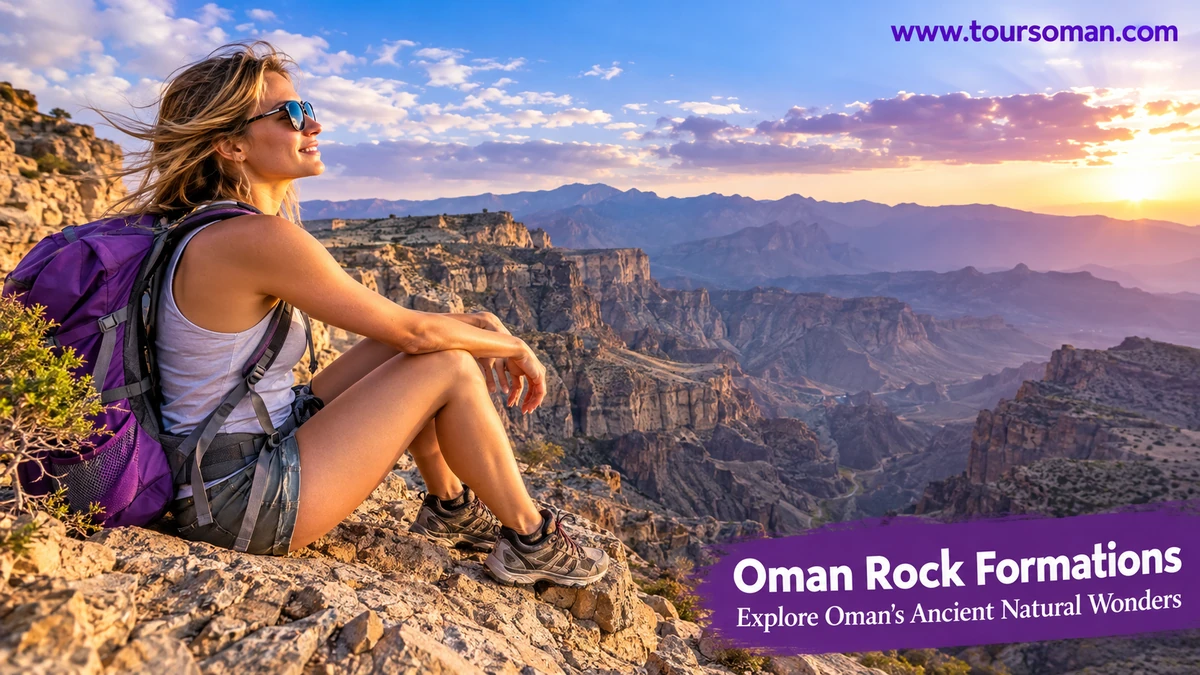
Oman Rock Formations: Explore Oman’s Ancient Natural Wonders
Imagine standing high above a deep canyon, surrounded by enormous rock walls that reveal millions of years of Earth’s history. In another part of Oman, unusual stone shapes rise from the ground like natural sculptures, while ancient ocean-floor rocks form part of the rugged mountain landscape.
Welcome to the world of Oman rock formations, one of the country’s most fascinating natural attractions.
Oman is known for its beautiful beaches, golden deserts and traditional villages, but its mountains and rocky landscapes offer something equally special. The country contains ancient marine rocks, dramatic cliffs, deep valleys, limestone formations and unusual natural shapes created by wind, water and geological forces.
Some of Oman’s rocks formed hundreds of millions of years ago. The Samail Ophiolite contains rocks that originally formed as oceanic crust and upper-mantle material before being pushed onto land.
The best part for travelers is that you do not need to be a geologist to enjoy these landscapes. You can admire the scenery, take memorable photographs, explore mountain viewpoints and learn about the land with a knowledgeable guide.

Discover Oman’s dramatic mountain landscapes
Depending on your interests, you could choose:
- 🏔️ Mountain scenery: Visit Jebel Shams and enjoy its enormous canyon views.
- 🪨 Unusual rock shapes: Explore the natural sculptures at Duqm Rock Garden.
- 🌊 Rocky canyons and water: Combine a visit to Wadi Shab with the Bimmah Sinkhole.
- 🧭 Geological discovery: Learn about ancient ocean-floor rocks around the Samail Ophiolite.
Start planning your adventure by exploring ToursOman’s Oman tours. If you have a particular geological destination in mind, you can also contact ToursOman to discuss your travel dates and preferred route.
H2: What Makes Oman’s Rock Formations So Special?

Experience Oman’s rugged landscapes
Oman’s rocky landscapes tell a story that began long before the country took its modern shape.
Over millions of years, ancient seas covered parts of the region. Volcanic activity created new rocks, movements inside the Earth pushed layers together, and mountain-building forces lifted rocks to the surface. Wind, rain and flowing water then continued to shape the land.
Today, visitors can see the results without needing to travel into a remote scientific research area.
Three features make Oman especially interesting.
H3: 1. Ancient Ocean-Floor Rocks
Parts of Oman contain rocks that once formed beneath an ancient ocean. These rocks are now exposed to land, giving visitors a rare opportunity to see material that normally lies beneath the Earth’s surface.
H3: 2. Dramatic Mountain Landscapes
The Al Hajar Mountains contain steep slopes, exposed rock layers and deep valleys. These features create some of the country’s most impressive viewpoints, particularly around Jebel Shams.
H3: 3. Natural Sculptures Shaped by Weather
Over long periods, wind, water and other natural forces wear away exposed rock. This process creates unusual shapes, rounded surfaces, sharp ridges and dramatic cliffs.
For travelers, this variety means that a rock-focused trip can include much more than looking at mountains from a distance. You can combine viewpoints, short walks, photography and cultural attractions in one carefully planned itinerary.
Planning tip: Decide whether you are most interested in geological history, mountain scenery or unusual rock shapes before choosing your tour. This will help you make better use of your holiday time.
H2: The Main Types of Rock Formations in Oman
You do not need to remember complicated scientific terms to understand the landscapes you see. The following table explains some of the main features in simple language.
| 🪨 Rock Type or Feature | 🔍 What It Means | 📍 Where You May See It |
| 🌊 Ophiolite | Ancient oceanic crust and upper-mantle rocks exposed on land | Northeastern Oman |
| 🐚 Limestone | Rock commonly formed from material deposited in ancient seas | Parts of the Al Hajar Mountains and coastal regions |
| ⛰️ Folded Rock Layers | Layers bent by pressure inside the Earth | Mountain slopes and exposed rock faces |
| 🌋 Volcanic Rock | Rock formed when melted material cools | Parts of the northeastern mountain region |
| 🗿 Weathered Rock Sculptures | Stone shapes formed through natural erosion | Duqm Rock Garden |
| 🏞️ Canyon Walls | Exposed rock faces along deep valleys | Jebel Shams and Wadi Shab |
These formations developed through different processes. Some formed beneath the sea, while others were changed by heat, pressure, uplift or erosion.
For visitors, the most rewarding approach is to choose a destination where the landscape matches what you want to experience.
If you prefer mountains, consider Jebel Shams. If unusual natural shapes interest you, Duqm Rock Garden is a stronger choice. If you want to combine rocks with water and walking, Wadi Shab may be more suitable.
H2: The Best Places to See Oman Rock Formations
Oman has several remarkable geological destinations, but they are spread across different regions. Choosing the right location will help you make the most of your holiday.
H3: 1. Al Hajar Mountains and Jebel Shams
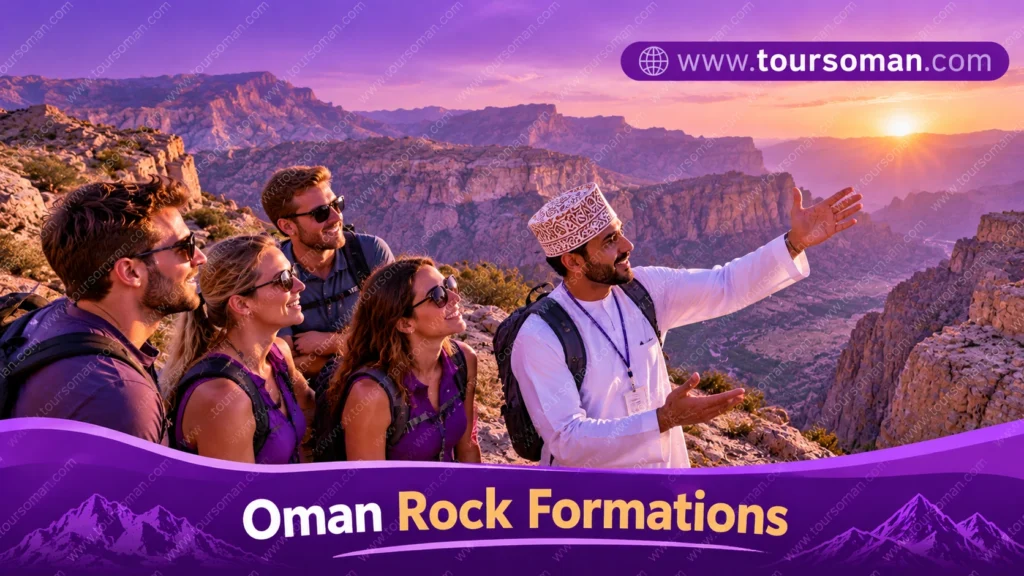
A memorable mountain adventure
The Al Hajar Mountains are among the best places to experience Oman’s rugged natural beauty. Their rocky peaks, deep valleys and exposed stone layers create a landscape that looks very different from the country’s sandy deserts.
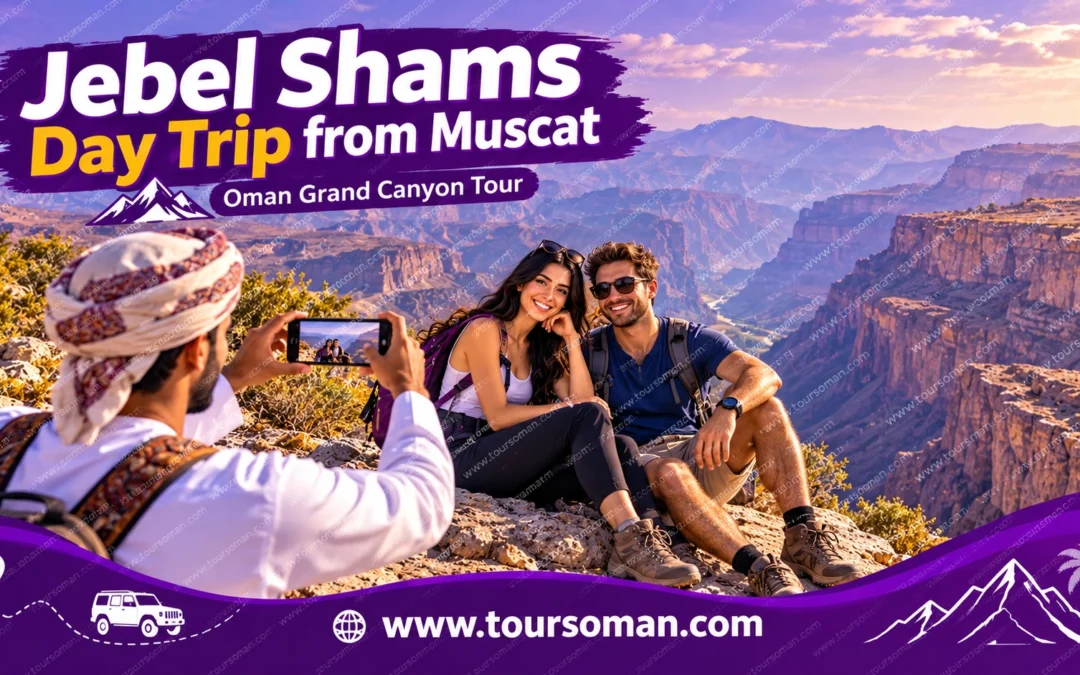
The highlight for many visitors is Jebel Shams, a famous mountain destination known for its enormous canyon views. The mountain area reaches elevations of around 3,000 meters, and the surrounding cliffs reveal layers of rock formed through ancient geological processes.
What can you enjoy here?
- 🏔️ Wide views across steep canyon walls and mountain ridges.
- 📸 Excellent opportunities for landscape photography.
- 🥾 Walking routes for travelers who want to explore beyond the main viewpoints.
- 🌄 Beautiful morning and late-afternoon scenery.
- 🌤️ Cooler conditions than many lowland areas during parts of the year.
Jebel Shams is an excellent choice for couples, photographers, nature lovers and visitors who want to experience Oman’s mountains without needing specialist geological knowledge.
A short sightseeing stop may be enough for travelers with limited time, while a longer excursion allows more time for walking, photography and enjoying the views.
How should you plan your visit?
Mountain trips from Muscat can involve substantial driving, so check the departure and return times before booking. Ask whether the itinerary includes several viewpoints, walking opportunities and enough time to enjoy the canyon.
Explore Oman tour options or browse Muscat day tours to investigate suitable arrangements. Confirm that Jebel Shams is included in your chosen itinerary.
H3: 2. Samail Ophiolite: Ancient Ocean Rocks on Land
The Samail Ophiolite is one of Oman’s most scientifically important geological features.
An ophiolite is a group of rocks that originally formed as oceanic crust and upper-mantle material but were later moved onto land by geological forces. The Samail Ophiolite preserves an unusually extensive section of this material, making it important to scientists studying how the Earth’s crust works.
For ordinary travelers, the exciting fact is simple: some of the rocks beneath your feet once formed in an ancient ocean.
The area offers an opportunity to understand how Oman’s landscape developed and why its mountains contain such a wide range of rock types.
What makes this destination interesting?
- 🪨 See exposed rocks associated with ancient oceanic crust.
- 🔍 Learn how movements inside the Earth changed the landscape.
- 📷 Photograph rugged terrain and contrasting rock surfaces.
- 🧭 Explore a different side of Oman beyond its famous beaches and deserts.
A knowledgeable guide can make this visit much more rewarding by explaining what the rocks reveal and pointing out features that might otherwise go unnoticed.
However, not every sightseeing guide specializes in geology, and some locations may require additional driving or walking. Confirm the planned stops and the guide’s experience if geological explanations are a priority.
For a trip around the Muscat region, browse 10 Best Day Trips from Muscat and contact ToursOman to ask whether a geology-focused route can be arranged.
H3: 3. Duqm Rock Garden: Nature’s Stone Sculptures
If you enjoy unusual landscapes, the Duqm Rock Garden offers a very different experience from the mountains of northern Oman.
Located in the Al Wusta region, the site contains striking natural rock shapes formed over millions of years. Sandstone and limestone have been shaped by natural processes, creating forms that may resemble sculptures, animals or abstract structures.
The landscape is particularly appealing to photographers because each rock shape creates different lines, shadows and patterns.
Why should you consider visiting Duqm?
- 🪨 Discover unusual natural stone formations.
- 📸 Take distinctive landscape photographs.
- 🌵 Experience an open, rugged environment away from busy urban areas.
- 🧭 Add a less familiar destination to a wider Oman itinerary.
Allow around one to two hours at the site as a starting point for planning, depending on how much walking and photography you want to do. This is an estimate rather than a confirmed tour duration.
Duqm is not simply a quick stop on every northern Oman itinerary. Before booking, check the distance from your starting point, transport arrangements and whether the Rock Garden is specifically included.
For a tailored route, explore Oman tours .
H3: 4. Bimmah Sinkhole and Wadi Shab: Rocks, Water and Canyons
Would you prefer to see rocky landscapes without spending the entire day in dry mountain scenery? The Bimmah Sinkhole and Wadi Shab are two attractive options along Oman’s northeastern coast.
The Bimmah Sinkhole is a natural depression filled with blue-green water and surrounded by exposed rock. It is a popular stop for photographs and a short visit.
Wadi Shab offers a different experience, with canyon walls, walking paths and pools. Its landscape shows how water can shape rock over long periods.
| 🌿 Feature | 🕳️ Bimmah Sinkhole | 🏞️ Wadi Shab |
| ⭐ Main attraction | 💧 Natural water-filled depression | 🪨 Rocky canyon and water pools |
| 🗺️ Typical visit | 📸 Short sightseeing stop | 🥾 Longer outdoor excursion |
| 🚶 Walking effort | 👣 Usually limited around the viewing area | ⛰️ More demanding, depending on the route |
| 👥 Best suited for | 🚗 Travelers wanting a quick scenic stop | 🥾 Visitors who enjoy walking and outdoor activities |
| 🏊 Swimming | 💦 Only where permitted and safe | 🌊 Depends on access and current conditions |
Can you visit both in one day?
Yes, combining them may be possible on a coastal trip from Muscat. However, allow enough time for driving, breaks and the walk at Wadi Shab.
Choose this option if you want a varied day that includes rocky scenery, water and outdoor exploration.
You can start by browsing Wadi Shab Tour from Muscat and confirming whether both destinations are included in the itinerary.
Safety tip: Wadi conditions can change after rainfall. Avoid entering wadis during flood risks, follow local guidance and do not assume that swimming is always safe or permitted.
H3: 5. Jebel Misht and the Nizwa Region: Mountains and History
The Nizwa region is a rewarding choice for travelers who want to combine mountain scenery with Oman’s cultural history.
Jebel Misht is known for its striking mountain profile and rugged rock faces. The wider region reveals the geological variety of the Al Hajar area, where ancient marine rocks and later geological movements helped shape the landscape.
Nearby, the archaeological sites of Bat, Al-Khutm and Al-Ayn provide a connection to Oman’s ancient past. These sites include settlements and burial monuments dating back to the Bronze Age.
A trip through this region can combine:
- 🏔️ Mountain scenery and rocky viewpoints.
- 🏛️ Historic forts and traditional towns.
- 🛍️ Local markets and cultural experiences.
- 📸 Opportunities to photograph the landscape and heritage sites.
This is a good option for travelers who want their holiday to include more than natural scenery.
Browse Oman tour packages to explore multi-stop holiday options. Check the exact destinations and travel times before choosing a package.
H2: Which Oman Tour Should You Book?
The best tour depends on your starting point, available time and preferred type of experience.
Instead of choosing a tour based only on its name, compare the destinations, activities and practical details.
| 🎯 Your Main Interest | 📍 Destination to Consider | ⏱️ Suggested Time Allowance | 🧭 Suitable Tour Style |
| ⛰️ Dramatic Mountain cliffs | 🏔️ Jebel Shams | 🚗 A full day from Muscat may be appropriate | 📸 Mountain sightseeing |
| 🌊 Ancient ocean-floor rocks | 🪨 Samail Ophiolite area | ⏳ Half day to full day, depending on the route | 🔬 Geological sightseeing |
| 🗿 Unusual stone sculptures | 🏜️ Duqm Rock Garden | ⏱️ Around 1–2 hours at the site, plus travel | 🚙 Dedicated destination visit |
| 🏞️ Rocky canyons and water | 💧 Wadi Shab and Bimmah Sinkhole | 🗓️ A full day combining both from Muscat | 🌊 Coastal outdoor trip |
| 🏔️ Mountains and traditional towns | 🏘️ Jebel Misht and Nizwa region | 🗓️ A full day or longer | 🕌 Mountain and cultural trip |
These are planning estimates, not confirmed ToursOman tour durations.
What Should You Check Before Booking?
Use this checklist to compare your options:
- Starting point: Does the tour depart from Muscat, Nizwa or another location?
- Transport: Is the vehicle suitable for the planned route?
- Guide: Can the guide explain the geological features you want to understand?
- Time at each stop: Will you have enough time to walk, take photographs and enjoy the scenery?
- Inclusions: Are transport, meals, entrance fees and hotel pickup included?
- Physical effort: Is walking suitable for everyone in your group?
- Price and cancellation: What is the final price, and what cancellation or rescheduling terms apply?
A local operator can help you plan around driving distances, road conditions and the time needed at each stop. The important thing is to confirm the actual itinerary rather than assume that every general Oman tour includes specialist geological locations.
For a multi-destination holiday, compare the options on the Oman Packages page.
H2: Best Time to Explore Oman’s Rocky Landscapes
The best time to explore Oman depends on the destination and the activities you want to enjoy.
For many travelers, October to April is a comfortable period for mountain sightseeing, photography and outdoor walks. However, temperatures vary between the coast, desert and higher mountain areas.
| 📅 Season | 🌤️ What to Expect | 💡 Travel Advice |
| 🍂 October–November | 🌡️ Conditions often become more comfortable after summer | ⛰️ A good period to consider mountain excursions |
| ❄️ December–February | 🌤️ Cooler days and cold nights at higher elevations | 🧥 Bring an extra layer for mountain visits |
| 🌸 March–April | ☀️ Temperatures generally begin to rise | 🌅 Start outdoor activities early |
| 🔥 May–September | 🌡️ Very hot conditions in many lowland areas | 🥵 Plan carefully and avoid strenuous activities during the hottest hours |
These are general seasonal guidelines, not a forecast for a particular destination or date.
H3: What Time of Day Is Best for Photographs?
Early morning and late afternoon often provide softer light that brings out the colors, shadows and textures of the rocks.
If photography is important to you, ask your tour provider whether the itinerary allows enough time at viewpoints during these hours.
Before traveling, check the weather and confirm the tour schedule. A good itinerary should allow you to enjoy the landscape without rushing between stops.
H2: What to Expect on a Guided Rock Formation Tour

Discover Oman’s natural beauty
A guided tour can help you understand the landscape while making your journey easier to plan.
Depending on the destination and package, your experience may include:
- 🚗 Transport between selected locations.
- 🏔️ Stops at mountain viewpoints and rocky landscapes.
- 📸 Time for photographs and sightseeing.
- 🧭 Explanations from a local guide.
- 🥾 Short walks, where appropriate.
- 🍽️ Meals or refreshments if included in the package.
Not every sightseeing tour includes a geological specialist. If you want detailed explanations about ancient ocean-floor rocks, fossils or mountain formation, ask about the guide’s experience before booking.
H2: How Much Do Rock Formation Tours Cost?
There is no single price for every geological excursion in Oman. Costs depend on the distance, tour duration, group size, transport and guide arrangements.
| 🧭 Tour Type | 💰 What Affects the Price? | ✅ What to Confirm |
| 📸 Short sightseeing trip | 📍 Distance and group size | 🚐 Pickup and time at the site |
| 🏔️ Full-day mountain excursion | 🚙 Driving time, transport and guide | 🍽️ Meals and included stops |
| 🪨 Private geological trip | 🧑🏫 Specialist guiding and custom route | 🚘 Guide expertise and private transport |
| 🗺️ multi-day geological journey | 🏨 Accommodation, meals and travel distance | 📋 Full itinerary and exclusions |
These are general comparisons, not confirmed ToursOman prices.
For an accurate quotation, visit ToursOman or contact the team with your travel dates, group size and preferred destinations.
H3: What Should You Confirm Is Included?
Before 💳 paying, ask whether your tour package includes:
- 🚐 Transport and hotel pickup.
- 🧑✈️ A driver or tour guide.
- 🍽️ Meals and refreshments.
- 🎟️ Entrance fees or optional activities.
- 🏨 Accommodation for multi-day trips.
- 💰 Any additional charges.
- 📅 Cancellation and rescheduling conditions.
Never assume that every service is included in the advertised price.
H2: How to Plan Your Trip and What to Bring
A little preparation can make your trip more comfortable and help you avoid unexpected problems.
Before You Leave
- Choose your destination: Decide whether you prefer mountains, unusual rock shapes, canyons or geological learning.
- Check driving distances: Some destinations are far apart and may require a full day or more.
- Confirm the vehicle: Ask whether the planned roads require a suitable four-wheel-drive vehicle.
- Check the weather: Heat, rain and poor visibility can affect outdoor activities.
- Review of the booking terms: Confirm the price, payment arrangements and cancellation conditions.
- Allow enough time: Avoid planning too many distant destinations into a single day.
H2: What Should You Pack?
Water and sun protection: Carry drinking water, sunscreen, sunglasses and a hat. Many rocky landscapes have little natural shade.
Suitable footwear: Wear comfortable shoes with good grips, particularly if your itinerary includes uneven paths or lose stones.
Camera and personal essentials: Bring your phone or camera, a spare battery if needed, and any personal medication you normally require.
Safety When Exploring Rocky Areas
Oman’s rocky landscapes are beautiful 🏜️, but steep edges ⛰️, loose stones 🪨 and changing weather 🌦️ can create hazards.
- ⚠️ Stay away from unstable cliff edges.
- 🧭 Follow your guide’s instructions.
- 🧗 Avoid climbing formations that are not intended for visitors.
- 🌧️ Never enter a wadi during flood risks.
- 🌿 Respect protected natural areas and archaeological sites.
If you are traveling with children or anyone with limited mobility, ask about walking distances, uneven ground and access to viewpoints before booking.
H2: Book Your Oman Landscape Experience

Plan your Oman landscape experience
Oman’s rock formations reveal a remarkable story of ancient oceans, mountain-building forces and millions of years of natural change.
Whether you want to photograph the cliffs of Jebel Shams, discover the unusual shapes of Duqm Rock Garden, explore rocky canyons or learn about the Samail Ophiolite, choosing the right route will help you get more from your holiday.
Before 📅 booking, consider three simple questions:
- 🏞️ Which landscape do you most want to see?
- ⏳ How much time do you have available?
- 🥾 Would you prefer relaxed sightseeing, outdoor walking, or a more detailed geological experience?
Your answers will help you choose an itinerary that matches your interests, budget and travel schedule.
Ready to plan your Oman adventure?
- Explore Oman tours.
- Compare Oman holiday packages.
- Check current offers.
- Contact ToursOman to discuss your preferred destinations and request a quotation.
Discover Oman’s extraordinary landscapes with a trip planned around the places you genuinely want to experience.
H2: Frequently Asked Questions About Oman Rock Formations
H3: What Are the Most Famous Rock Formations in Oman?
Some notable geological destinations include the Samail Ophiolite, the Al Hajar Mountains, Jebel Shams, Duqm Rock Garden and the rocky canyon landscapes around Wadi Shab. The best choice depends on whether you prefer mountain scenery, unusual shapes or geological learning.
H3: Why Is Oman Famous for Its Geology?
Oman contains exposed rocks from ancient oceanic crust and upper-mantle material, particularly in the Samail Ophiolite. Its mountains and canyons also preserve evidence of major changes in the Earth’s history.
H3: Can I Visit Oman Rock Formations Without a Geology Background?
Yes. You can enjoy the scenery without scientific knowledge. A knowledgeable guide who explains the landscape in simple language can make the experience even more rewarding.
H3: Where Can I See Unusual Natural Rock Sculptures in Oman?
Duqm Rock Garden is a notable destination for unusual stone shapes formed by natural processes over millions of years.
H3: Can I Visit Jebel Shams on a Day Trip from Muscat?
A day trip may be possible, but it can involve substantial driving. Confirm the departure time, return time, planned stops and transport arrangements before booking.
You can explore Jebel Shams Day Trip from Muscat
H3: What Is the Best Time to Visit Oman’s Rocky Landscapes?
October to April is a useful starting point for planning outdoor sightseeing. Conditions vary with location and altitude, so check the forecast before traveling.
H3: How Much Does an Oman Geological Tour Cost?
Prices depend on the destination, duration, group size, transport and guide expertise. Contact ToursOman with your travel details to request a quotation.
H3: Are Oman Rock Formations Suitable for Families?
Many viewpoints are suitable for families, but some locations require walking over uneven ground or near steep edges. Choose destinations that suit your group and follow local safety guidance.
H3: Do I Need a Four-Wheel-Drive Vehicle?
Not for every destination. Some locations are reached by paved roads, while other routes may require suitable off-road transport. Confirm the requirements for your specific itinerary.
H3: Can I Combine Rock Formations with Cultural Attractions?
Yes. Depending on your route, you may be able to combine geological viewpoints with Nizwa, traditional villages, forts and archaeological sites.
H3: Are Oman’s Rock Formations Millions of Years Old?
Yes. Oman’s geological history spans hundreds of millions of years, and its different formations developed at different times through processes such as volcanic activity, movements of the Earth’s plates and erosion.
H3: How Do I Book a Rock Formation Tour with ToursOman?
Start by exploring the ToursOman website, then review the available tour categories. If you want a specific geological destination, contact the team to discuss your travel dates, group size and preferred route.
Before confirming your booking, check the final price, itinerary, inclusions and cancellation conditions.
Written by: Toursoman Author