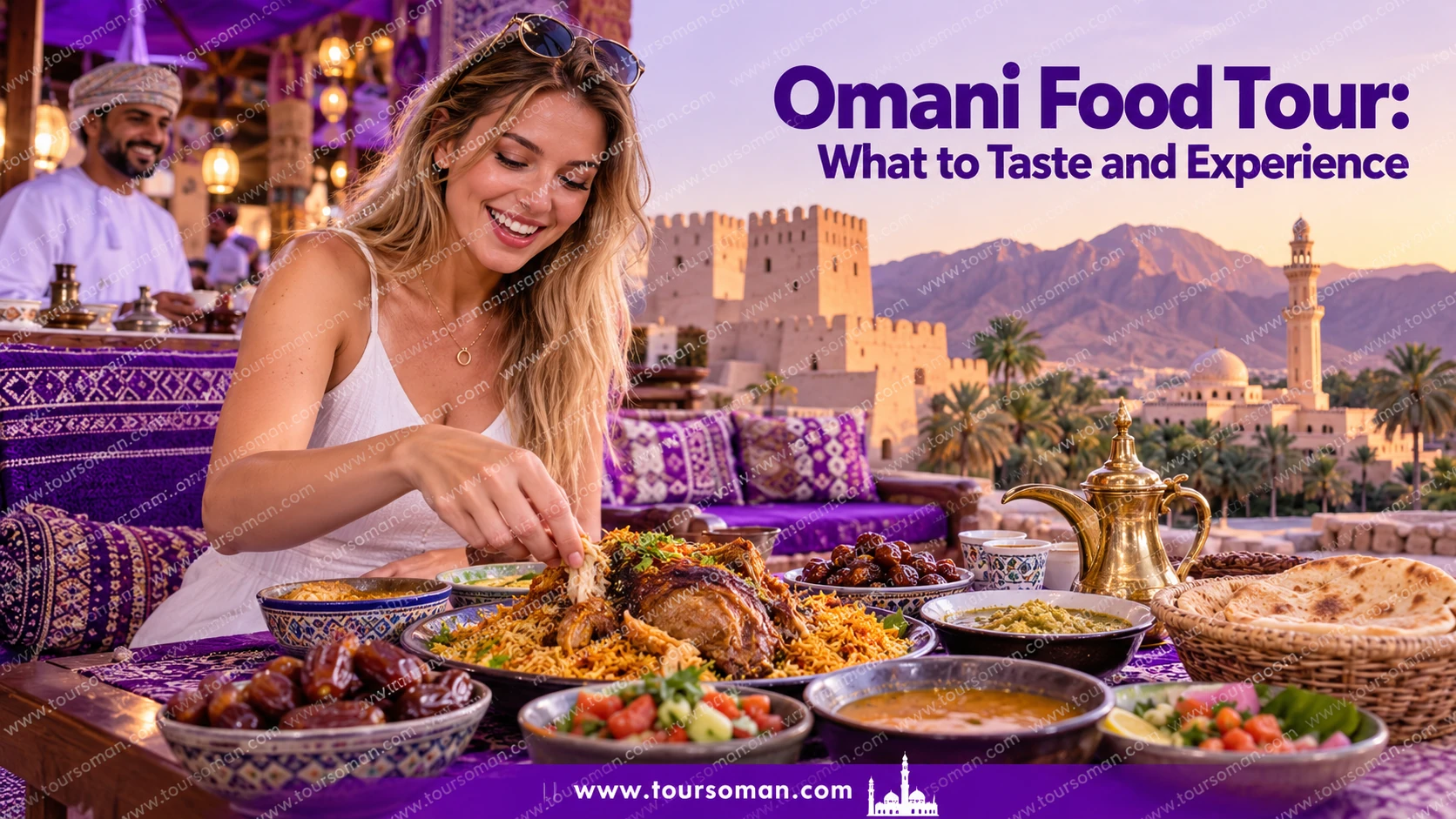
Omani Food Tour: What to Taste and Experience
An Omani food tour is a wonderful way to discover the country’s culture through its traditional dishes, local markets and famous hospitality. From fragrant rice and slow-cooked meat to fresh seafood, sweet dates and traditional coffee, Omani cuisine offers a variety of flavors that make every meal part of the travel experience.
Whether you are visiting Muscat for the first time, exploring the historic streets of Nizwa or enjoying a holiday in Salalah, tasting local food can help you understand the traditions and daily life of Oman.
But what should you try first? Where can you find authentic Omani food? And how can you choose a food experience that fits your budget and travel plans?
In this guide, you will discover the must-try Omani dishes, the best food experiences to consider, practical booking tips and ways to combine local cuisine with your Oman holiday.
Planning a wider trip? Explore Oman tours and Muscat day tours to complement your culinary adventure with sightseeing and cultural activities.
H2: Why Take an Omani Food Tour?

Traditional Omani dining
An Omani food tour is about more than eating traditional dishes. It gives you the opportunity to discover local ingredients, understand cooking methods and learn how food connects with Omani culture.
Instead of choosing unfamiliar dishes from a restaurant menu, a guided experience can introduce you to popular meals and explain what makes each one special.
H3: Discover Authentic Local Flavors
Omani cuisine combines fragrant spices, rice, meat, seafood, dates and traditional sweets. Recipes vary between regions and families, giving visitors plenty of flavors to discover.
During a food tour, you may have the opportunity to:
- 🍛 Taste traditional meals such as shuwa and majboos.
- 🐟 Discover seafood dishes influenced by Oman’s coastal communities.
- ☕ Experience Omani coffee served with dates.
- 🍬 Try traditional sweets, including Omani halwa.
- 🛍️ Explore local markets selling spices, dates and other food products.
The exact dishes depend on the location, season and tour arrangements, so confirm the available tastings before booking.
H3: Learn About Omani Traditions
Food plays an important role in Omani hospitality and celebrations. Shuwa, for example, is traditionally prepared for special occasions, while coffee and dates are commonly associated with welcoming guests.
A local guide can explain these traditions and help you understand the stories behind the food.
H3: Enjoy a Convenient Food Experience
Planning your own food adventure can involve researching restaurants, checking opening hours and deciding what to order. A well-organized food tour can simplify these decisions by bringing several experiences together.
For visitors with limited time, combining a food experience with sightseeing can also be a practical way to discover more of Oman.
Explore Muscat day tours if you want to plan your culinary experience around your time in the capital.
H2: 10 Traditional Omani Foods to Taste
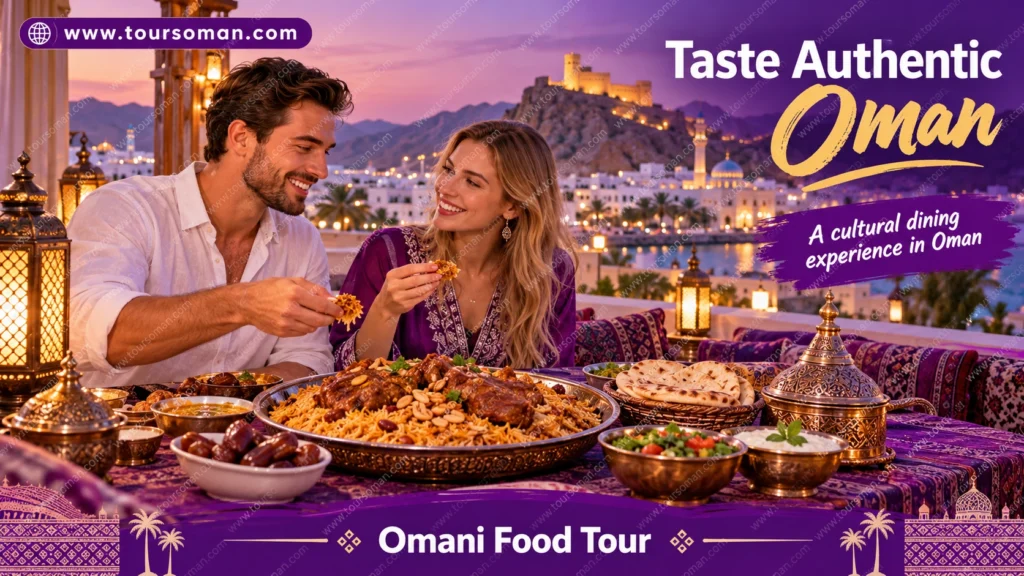
Taste authentic Oman
If this is your first visit to Oman, start with a selection of traditional dishes, snacks, drinks and desserts. Sampling several smaller portions can help you discover different flavors without committing yourself to one large meal.
H3:1. Shuwa: Traditional Slow-Cooked Meat
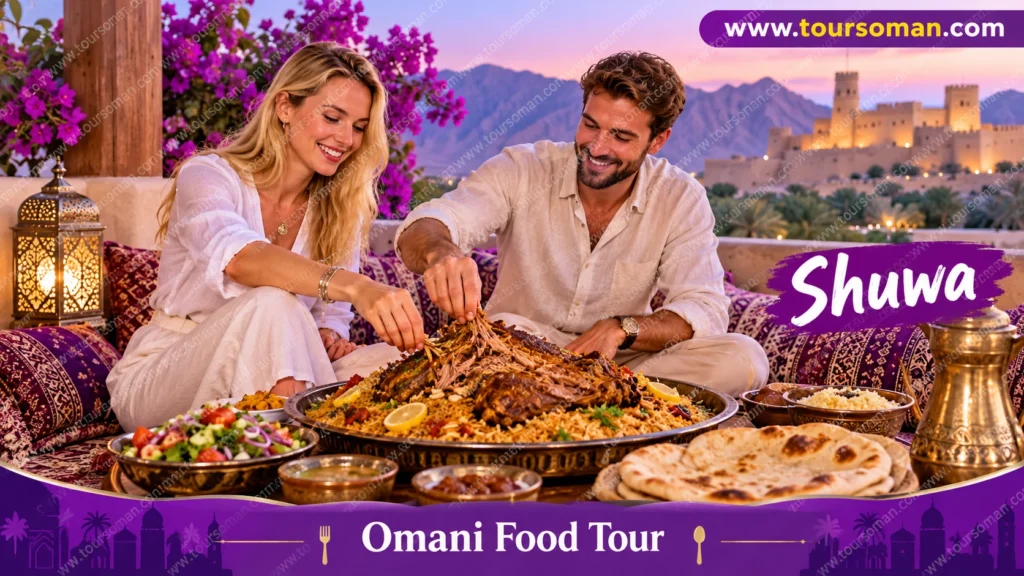
Omani food traditions
Shuwa is one of Oman’s best-known traditional dishes. It is prepared by marinating meat with spices, wrapping it and cooking it slowly in an underground oven. The cooking process can take many hours and sometimes longer than a day.
🍖 The result is tender, flavorful meat, often served with 🍚 rice.
Shuwa is particularly associated with celebrations and family gatherings, making it an excellent choice for travelers interested in Omani food traditions.
What to know before booking: Shuwa may not be available every day. If tasting this dish is important to you, ask whether it will be served during your visit.
H3: 2. Majboos: Fragrant Rice with Meat

Discover local flavors
Majboos is a popular rice dish prepared with a blend of spices and served with chicken, lamb or fish.
The rice absorbs the flavors of the cooking ingredients, creating a rich aroma and a satisfying meal. It is a good starting point for visitors who want to experience traditional Omani food without choosing something too unfamiliar.
🍛 Majboos is also a practical choice for travelers looking for a hearty lunch or dinner during a food tour.
H3: 3. Mashuai: Traditional Omani Seafood
Oman’s long coastline has helped shape its seafood traditions. Mashuai is commonly associated with grilled kingfish served with lemon-flavored rice.
The combination of fish🐟, citrus🍋, and rice 🍚 offers a different experience from the country’s meat-based dishes.
If you enjoy seafood, ask about mashuai when visiting traditional restaurants or coastal destinations. Availability and preparation methods can vary.
H3: 4. Harees: A Comforting Traditional Dish
Harees is made from wheat and meat cooked until the ingredients form a thick, soft mixture.
Its texture is different from rice-based dishes, making it an interesting option for visitors who want to discover a wider range of Omani flavors.
🥣 Harees is often associated with Ramadan🌙 and special occasions, although availability varies between restaurants and households.
H3: 5. Omani Halwa: A Traditional Sweet
Omani halwa is a rich, soft sweet traditionally prepared with ingredients such as sugar, starch, ghee and flavorings including saffron, cardamom or rosewater.
It is often served during gatherings and celebrations, commonly alongside Omani coffee.
🍯😋 The sweetness and texture can vary between producers, so trying a small portion is a great way to discover which variety you prefer.
You may also find halwa in traditional markets, where it can be purchased as a gift or souvenir.
H3: 6. Omani Kahwa: Traditional Coffee

Omani hospitality
Omani kahwa is a traditional coffee commonly flavored with cardamom and served in small cups.
☕🌴 It is often accompanied by dates and plays an important role in Omani hospitality.
Trying kahwa gives you an opportunity to experience a local custom rather than simply ordering another drink. Your guide can explain how coffee is served and why it is an important part of welcoming guests.
H3: 7. Omani Dates: A Natural Local Favorite
Dates are widely enjoyed throughout Oman and come in different varieties, sizes and textures.
🌴😋 Some are soft and sweet, while others are firmer. ☕ They may be served with coffee, offered to guests, or purchased from local markets. 🛍️
During a food tour, compare different varieties and ask local sellers which ones they recommend. Dates are also a convenient gift to take home, subject to your destination country’s import rules.
H3: 8. Mishkak: Grilled Meat Skewers
Mishkak consists of marinated pieces of meat grilled on skewers. It is a popular choice for travelers interested in grilled food and informal local eating.
🍖🌶️ The meat is seasoned before cooking, creating a savory flavor that pairs well with 🫓 bread or other accompaniments.
Mishkak is especially suitable for a tasting itinerary because smaller portions allow you to leave room for other dishes.
H3: 9. Traditional Omani Bread
🫓 Omani bread comes in different forms and can be served with both 🍯 sweet and 🧀 savory foods.
Depending on the variety, it may be enjoyed with honey, cheese, eggs or a main meal. Bread is a useful introduction to everyday eating habits and provides a contrast to richer dishes such as shuwa.
Ask your guide which local bread is commonly eaten in the area you are visiting.
H3: 10. Traditional Omani Sweets and Snacks
Beyond halwa, local shops may offer other sweets and snacks depending on the region and season.
😋🍬 Exploring these smaller treats is an enjoyable way to finish a food tour, particularly if you want to 🛍️ purchase local products to take home.
Our recommendation: For your first Omani food experience, try majboos, mishkak, halwa, kahwa and dates. Add shuwa or mashuai if they are available and match your preferences.
H2: What to Experience on an Omani Food Tour

Culinary discovery
A memorable food tour should include more than a meal. The most rewarding experiences combine tasting, cultural discovery and opportunities to learn about local ingredients.
H3: Visit a Traditional Market
Traditional markets offer a chance to discover the ingredients used in Omani cooking and observe local shopping customs.
Depending on the market, you may find dates, spices, coffee, halwa and other traditional products.
During your visit, take time to:
- 🍯 Explore the different varieties of dates and traditional sweets.
- 🌶️ Discover the spices used in traditional rice and meat dishes.
- 🛍️ Ask sellers about local products and ingredients.
- 🎁 Purchase suitable food souvenirs to take home, if you wish.
Muttrah Souq in Muscat is worth considering if you want to combine traditional shopping with sightseeing.
Before booking, ask whether your food experience includes a market visit and enough time to stop at shops rather than simply passing through.
H3: Learn About Traditional Cooking Methods
Omani cooking includes a variety of techniques, from grilling meat overheat to preparing rice dishes with carefully balanced spices.
Shuwa is particularly interesting because of its traditional slow-cooking method. Other dishes demonstrate how ingredients are combined to create distinctive textures and flavors.
If your chosen experience includes a cooking demonstration, ask whether you can watch the preparation process and learn about the ingredients.
A cooking demonstration is not included in every food tour, so confirm this when making your enquiry.
H3: Experience Omani Coffee and Hospitality
Coffee, dates and traditional sweets offer a simple introduction to Omani hospitality.
During your visit, you may learn when these foods are served, how they are presented to guests and why they remain important in social gatherings.
You do not need to speak Arabic to enjoy this experience. Showing interest in local traditions and asking respectful questions can make the interaction more rewarding.
H3: Discover Regional Food Traditions
Oman’s geography influences its cuisine. Coastal areas have strong seafood traditions, while inland communities have their own ways of preparing meat, rice and other local ingredients.
If you have several days in Oman, consider exploring different destinations rather than limiting your food experience to one city.
Browse Oman tours to plan your wider journey and ask which local food experiences are available along your route.
H2: Best Places to Enjoy Omani Food
The best place to experience Omani food depends on your travel plans, the dishes you want to taste and how much time you have available.
H3: Muscat: Markets and Traditional Restaurants

Food and culture
🏙️ Muscat is a practical starting point for first-time visitors. 🇴🇲
The capital offers opportunities to explore traditional markets, discover local restaurants and combine food experiences with sightseeing.
It is particularly suitable for couples, families and travelers with a short stay.
If you are staying in Muscat, explore Muscat day tours to organize your sightseeing around your available time.
H3: Nizwa: Traditional Food and Market Culture

Explore Omani cuisine
🏰 Nizwa is known for its historic character and traditional market culture. 🛍️
It is worth considering if you want to combine food discovery with an exploration of Omani heritage.
A visit can provide opportunities to look for dates, traditional products and local dishes, depending on what is available during your trip.
Read what Nizwa is known for to help plan your visit.
H3: Salalah: Seafood and Southern Flavours

Taste Oman
🌴 Salalah offers a different setting for discovering Omani food. 🍽️🇴🇲, including seafood and regional produce.
The wider Dhofar region is also known for its distinctive landscape and seasonal attractions, making it possible to combine food stops with sightseeing.
Explore Salalah day tours when planning your time in southern Oman.
Food availability varies by destination and season. Confirm specific dishes, restaurant stops and food-tour arrangements before booking.
H2: Best Times of the Year for an Omani Food Experience
While traditional Omani dishes can be enjoyed year-round, the timing of your trip can greatly enhance your culinary journey. Different seasons bring unique food highlights, festivals, and regional specialties across the country.
H3: Khareef Season in Salalah (June to September)
If you visit southern Oman during the summer monsoon (Khareef) season, the Dhofar region transforms into a lush green paradise. This is the best time to enjoy fresh local seafood, seasonal tropical fruits (like bananas, papayas, and coconuts), and warm traditional dishes served against a misty, cool backdrop.
H3: The Holy Month of Ramadan
Experiencing Omani food culture during Ramadan offers a deeply authentic perspective. After sunset, families and communities gather for Iftar, where special festive dishes, rich sweets, and traditional beverages take center stage. Local restaurants and night markets come alive with unique culinary traditions that you won’t see during the rest of the year.
H3: Cooler Winter Months (October to April)
The cooler months are ideal for exploring outdoor traditional markets (Souqs) in Muscat and Nizwa, tasting hot Mishkak skewers in the evening, and enjoying day tours without the intense summer heat. Outdoor dining and food-walking tours are most comfortable during this period.
H2: Example Omani Food Tour Itinerary
If you have never taken a food tour before, a sample itinerary can help you understand how the experience might work.
The following is an example of a three-hour food experience in Muscat. It is a suggested itinerary, not a confirmed ToursOman package.
H3: Stop 1: Explore a Traditional Market — 30 Minutes
Begin by discovering local ingredients, including spices, dates and traditional sweets.
This is an opportunity to learn about the products used in Omani cooking and see what local shops offer.
H3: Stop 2: Taste Traditional Dishes — 60 Minutes
Visit a suitable local restaurant or food stop to sample dishes such as majboos, mishkak or other available specialities.
A selection of smaller portions may allow you to experience several flavors without feeling too full.
H3: Stop 3: Enjoy Coffee, Dates and Sweets — 30 Minutes
Take a break to experience Omani kahwa, dates and halwa.
This part of the experience provides an opportunity to learn about traditional hospitality and choose local sweets you may want to purchase.
H3: Stop 4: Learn About Local Food Culture — 30 Minutes
Ask questions about cooking methods, regional differences and traditional meals.
If a local guide is included, use this time to discover which foods are commonly served during celebrations, and which are part of everyday life.
H3: Stop 5: Enjoy Free Time and Shopping — 30 Minutes
Finish with time to explore the market, take photographs, where permitted and purchase suitable souvenirs.
Total suggested duration: three hours. The Actual stops, timings, transport and food inclusions depend on the tour you arrange.
If you want to combine food with a wider sightseeing experience, explore Oman packages.
H2: Omani Food Tour Prices and Inclusions
The price of an Omani food tour depends on the duration, group size, transport arrangements, guide services and food included.
Some experiences focus on a few tastings, while others may include a full meal, market visits or a cooking demonstration.
Instead of comparing prices alone, check exactly what you will receive.
H3: What Should Be Included?
Before booking, ask about the following:
- 🍽️ Food and drinks: Which dishes, tasting portions, and beverages are covered?
- 🧑🏫 Guide services: Is a local guide included throughout the experience?
- 🚐 Transport: Is hotel pickup available, or must you meet at a specific location?
- 🛍️ Market visits: Are tastings included, or do you pay for purchases separately?
- 👨🍳 Cooking activities: Does the experience include a demonstration or hands-on lesson?
- 👥 Group size: Is the tour private or shared with other travelers?
- 🥗 Dietary needs: Can the provider accommodate your preferences or allergies?
- 📅 Cancellation policy: What happens if your plans change?
H3: How Much Extra Money Should You Bring?
Even when a tour includes food, you may want extra money for additional drinks, dishes or souvenirs.
Consider keeping a separate budget for:
- 🌴 Dates and traditional sweets.
- 🌶️ Spices and other local products.
- 🍽️ Additional restaurant orders.
- 🚕 Transport that is not included in your package.
For current offers, visit the ToursOman offers page and contact the team to ask about available food-focused experiences.
Prices and inclusions should always be confirmed before booking.
H2: How to Choose the Right Food Tour
The right food tour depends on your interests, schedule and travel group. A short tasting experience may be perfect for Oman Shore excursions cruise passenger, while a food enthusiast may prefer longer to experience with cooking demonstrations.
Compare the Main Options
| 🍽️ Tour type | ⏱️ Suggested duration | 🎯 Best for |
| 🥘 Short food tasting | 1–2 hours | 🕒 Travelers with limited time |
| 🛍️ Market and food tour | 2–4 hours | 🌍 First-time visitors |
| 👨🍳 Cooking and food experience | 3–5 hours | 📖 Travelers interested in recipes |
| ❤️ Private food experience | Flexible | 👨👩👧 Couples and families |
| 🏛️ Food and sightseeing trip | Half or full day | 🇴🇲 Visitors wanting a wider cultural experience |
These are suggested planning ranges rather than confirmed ToursOman products.
Five Questions to Ask Before Booking
- Which dishes will I taste? Ask for examples of the actual food included.
- Is the food included in the price? Check whether additional dishes cost extra.
- Can the tour meet my dietary needs? Explain any allergies or food restrictions in advance.
- How much walking is involved? This is important for families and travelers with mobility needs.
- What is the cancellation policy? Understand the conditions before making payment.
If you are planning a wider holiday, read how to book affordable Oman holiday packages online.
H2: Practical Tips Before You Book
A little preparation can help you enjoy your food tour and avoid unnecessary problems.
⏰ Choose a Suitable Time
Morning visits may be suitable for markets and shopping, while afternoon or evening experiences may work better for meals.
Opening hours and food availability vary, so confirm the schedule with the provider.
During Ramadan, dining hours and meal arrangements may differ. Check local guidance and plan your experience accordingly.
🥗 Explain Dietary Requirements in Advance
If you avoid certain ingredients, tell the provider before booking.
Ask about nuts, dairy, wheat, seafood and other ingredients that may affect your choices. If you have a serious allergy, confirm whether the provider can safely accommodate it rather than relying on assumptions.
👕 Wear Comfortable Clothing
Market visits may involve walking and standing outdoors. Comfortable shoes, suitable clothing and drinking water can help you enjoy the experience.
Respect local customs, particularly when visiting traditional neighborhoods and religious sites.
📅 Book Ahead for Specific Dishes
Some traditional dishes require lengthy preparation or are more commonly served on special occasions.
If you particularly want to taste shuwa, for example, confirm its availability before booking.
This simple step helps ensure that the experience matches your expectations.
H2: Why Explore Omani Food with a Local Guide?
A local guide can help you understand the food you are tasting and discover details that may be difficult to find on your own.
Instead of guessing what to order, you can ask about ingredients, preparation methods and the traditions connected with each dish.
A guide may also help you:
- 🍽️ Discover suitable local restaurants and food stops.
- 🥘 Understand the differences between traditional dishes.
- 🛍️ Explore markets and identify local products.
- 🕒 Plan tastings around your schedule.
- 🇴🇲 Learn about food customs and Omani hospitality.
When choosing a provider, look for clear information about the itinerary, guide services, inclusions and booking conditions.
You can learn more about ToursOman through the About page or ask about available arrangements through the Contact Us page.
H2: An Example of a Better-Planned Food Experience

A memorable food tour
Imagine a couple visiting Muscat for two days. They want to taste traditional Omani dishes but do not know what to order or where to find them.
Rather than spending time researching every restaurant, they could plan an experience that combines a traditional market visit, several small tastings, coffee and dates, and a meal featuring a local specialty if available.
This is an illustrative example, not a documented customer case study or a confirmed ToursOman booking. It shows how planning around a visitor’s interests can make a food experience more useful and enjoyable.
H2: Book Your Oman Experience
An Omani food tour offers a memorable way to discover the country through its flavors, markets and hospitality.
From fragrant majboos and slow-cooked shuwa to traditional coffee, dates and halwa, each dish offers a different perspective on Oman’s food culture.
The best experience is one that fits your schedule, includes the dishes you want to try and provides clear information about the price and arrangements.
Before planning your trip:
- Explore available Oman tours.
- Consider Muscat day tours if you are staying in the capital.
- Check out the latest ToursOman offers.
- Contact ToursOman to ask about available food experiences, pricing and special requests.
Make traditional Omani flavors part of your next holiday. Share your travel dates, group size and preferred dishes with ToursOman to find out which arrangements may suit your plans.
H2: Frequently Asked Questions Omani food tour
H3: What is an Omani food tour?
An Omani food tour is an experience focused on traditional dishes, local ingredients and food culture. Depending on the itinerary, it may include food tastings, market visits, restaurant stops or cooking demonstrations.
H3: What food should I try first in Oman?
Start with majboos, Omani halwa, kahwa and dates. You can also try shuwa for a traditional meat dish or mashuai for a taste of Oman’s seafood traditions.
H3: Is Omani food spicy?
Omani cuisine uses spices such as cardamom, cinnamon, turmeric and cloves. These often provide aroma and flavor rather than extreme heat. However, recipes vary, so ask about Chilli and seasoning if you prefer mild food.
H3: Can vegetarians enjoy an Omani food tour?
Yes, although the available options depend on the itinerary. Bread, dates, halwa and some vegetable or rice dishes may be suitable, depending on their ingredients and preparation. Explain your dietary needs before booking.
H3: Is shuwa available every day?
Not necessarily. Shuwa is traditionally associated with celebrations and special occasions, and availability varies. Confirm whether it will be served on your chosen date.
H3: How long does an Omani food tour take?
A short tasting experience may take one to two hours, while a market and restaurant tour may take two to four hours. Cooking activities and experiences combined with sightseeing can take longer.
H3: How much does an Omani food tour cost?
The price depends on the duration, group size, guide services, transport and included food. Ask the provider for a full quotation and check for additional charges before booking.
H3: Is an Omani food tour suitable for children?
Many food experiences can suit families, particularly those with flexible tasting options and manageable walking distances. Confirm the duration, food choices and any age restrictions before booking.
H3: Can I combine a food tour with sightseeing in Muscat?
Yes, depending on the itinerary and available time. You can combine food experiences with market visits and cultural attractions. Explore Muscat day tours when planning your visit.
H3: What should I check before booking an Omani food tour?
Confirm the itinerary, included food and drinks, transport, group size, dietary options, total price and cancellation conditions. If you want to taste a specific dish, ask whether it is guaranteed or subject to availability.
H3: Can I buy Omani food products to take home?
Yes. Dates, packaged sweets, spices and other local products may be available in traditional markets. Check your destination country’s customs rules before purchasing food to take home.
H3: How can I arrange an Omani food experience through ToursOman?
Visit the ToursOman website or use the contact page to ask about available experiences. Share your travel dates, group size, preferred location and dietary needs so the team can advise you on suitable options.
Written by: Toursoman Author