Omani Food Culture and Dining Customs: A Visitor’s Guide
Omani food culture offers visitors much more than delicious meals. It provides a window into the country’s history, traditions, hospitality and everyday life. From fragrant rice dishes and freshly grilled seafood to traditional coffee served with dates, food is an important part of the Omani experience.
For travelers visiting Oman for the first time, understanding local dining customs can make every meal more enjoyable. Knowing which traditional dishes to try, how coffee is served and what to expect when sharing food with local people helps you feel more comfortable and connected to the culture.
Whether you are exploring Muscat’s traditional markets, visiting the historic town of Nizwa or discovering the landscapes of Salalah, local food can become a memorable part of your journey.
Planning your holiday? Explore ToursOman’s Oman tours to discover the destinations and experiences that suit your travel plans.
H2: What Makes Omani Food Culture Special?
Omani cuisine reflects the country’s location along important historic trading routes. Over many generations, connections with Arabia, India and East Africa influenced local ingredients, cooking methods and flavors.
Rice, meat, seafood, dates and aromatic spices feature in many traditional meals. However, Omani food is not the same everywhere. Coastal communities have strong connections with fishing, while food traditions in the interior and southern regions reflect their own local ingredients and customs.
Several features make Omani food culture distinctive:
🍚 Rice and meat: Rice served with lamb, goat or chicken is common in traditional meals.
🐟 Seafood: Fish is an important choice in many coastal communities.
🌿 Aromatic spices: Cardamom, cinnamon, cloves and turmeric add fragrance and flavor.
🌴 Dates and sweets: Dates and Omani halwa are closely associated with hospitality.
🍽️ Shared meals: Food often brings families and friends together during celebrations and everyday gatherings.
H3: The Importance of Hospitality
Hospitality is one of the most memorable aspects of Omani culture. Offering coffee, dates or other refreshments is a familiar way to welcome guests and show respect.
You may experience this tradition during a cultural visit, a family gathering or a stay in a traditional setting. Even when dining in a restaurant, you can discover how local food reflects the country’s traditions.
For a first introduction to Omani culture, consider exploring Muscat’s landmarks and traditional markets before enjoying a meal at a restaurant serving local dishes. Browse Mutrah Souq Muscat when planning your visit.
H2: Traditional Omani Dishes Every Visitor Should Try

Explore traditional Omani cuisine
Trying traditional food is one of the easiest ways to discover a country’s culture. If you are unsure what to order in Oman, start with these well-known dishes.
H3: 1. Shuwa: Traditional Slow-Cooked Meat
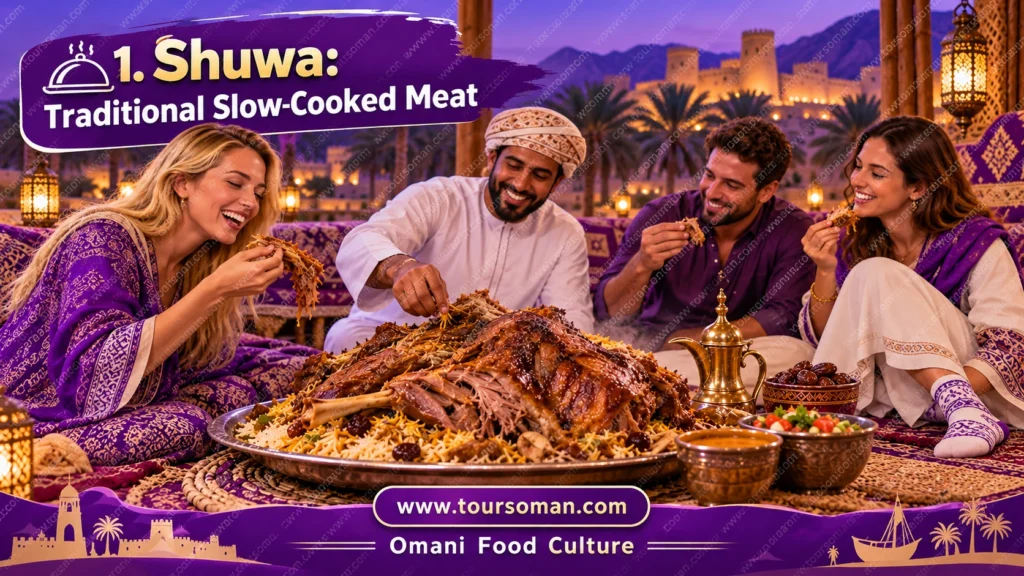
Discover Shuwa
Shuwa is one of Oman’s best-known festive dishes. Meat, often lamb or goat, is marinated with spices and cooked slowly, traditionally in an underground oven.
The long cooking process helps make the meat tender and allows the flavors to develop. Shuwa is especially associated with celebrations, festivals and family gatherings.
Best for: 🍽️ Travelers who want to experience an important part of traditional Omani cooking.
H3: 2. Qabooli: Fragrant Rice with Meat
Qabooli is a satisfying rice dish that may be prepared with meat, aromatic spices, nuts and raisins. Recipes vary, but the combination creates a rich flavor with both savory and slightly sweet notes.
It is a good introduction to the rice dishes commonly found in the region.
Best for: 🍛Visitors who enjoy hearty meals and fragrant spices.
H3: 3. Harees: A Comforting Traditional Dish
Harees combines wheat and meat, which are cooked together until they form a soft, thick mixture. It is associated with family meals and special occasions.
Its simple ingredients and smooth texture make it different from the more separate rice-and-meat dishes.
Best for: 🍲Travelers who enjoy comforting, traditional food.
H3: 4. Mishkak: Grilled Meat Skewers
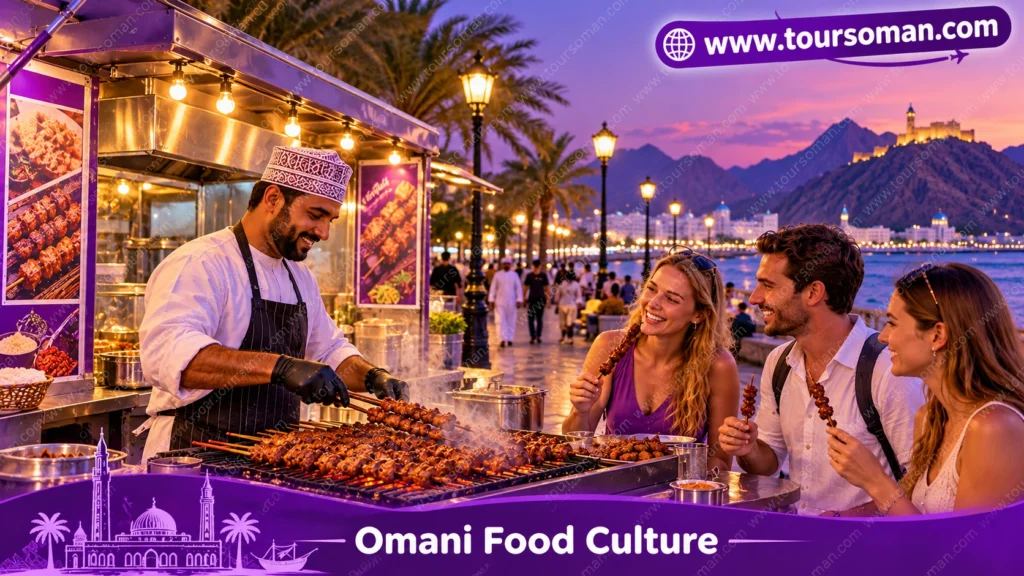
Omani Food Culture – Enjoy freshly grilled Mishkak along Muscat’s beautiful waterfront
Mishkak consists of pieces of seasoned meat threaded onto skewers and grilled. It is a popular option for people who enjoy smoky flavors and freshly cooked meat.
It can be a convenient choice when you want to sample local food without ordering a large meal.
Best for: 🍢Casual dining and travelers who enjoy grilled food.
H3: 5. Mashuai: Traditional Fish
Mashuai is a traditional fish dish commonly associated with kingfish and served with rice and lemon. It is particularly worth looking for when exploring coastal destinations.
Fish dishes can vary according to the location, availability of seafood and restaurant.
Best for: 🐟 Seafood lovers who want to explore Oman’s coastal food traditions.
H3: 6. Omani Halwa: A Traditional Sweet
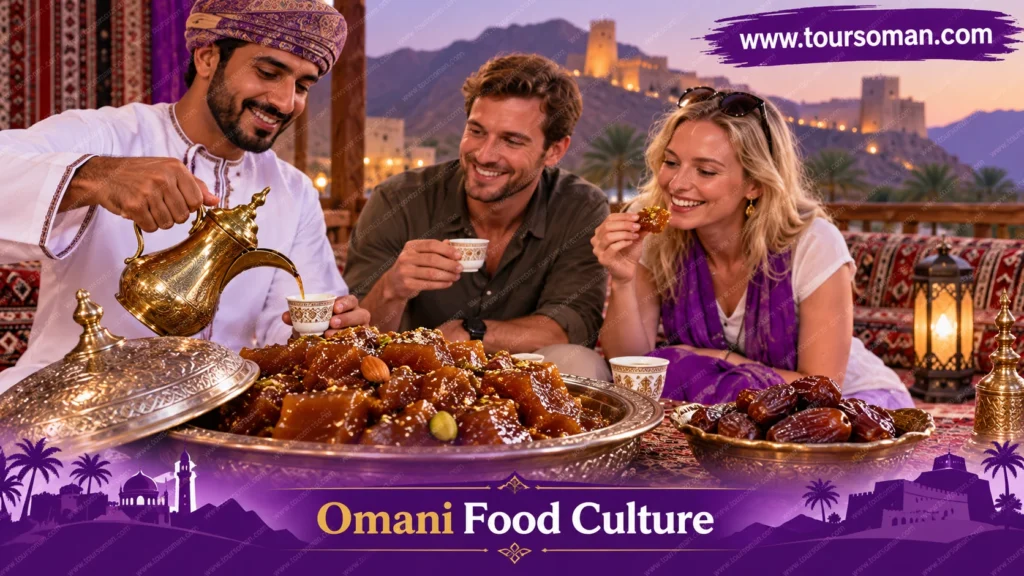
Discover traditional Omani halwa
Omani halwa is a rich, soft sweet often prepared with sugar, starch, ghee, spices and rosewater. Some varieties include nuts or other flavorings.
It is commonly served with traditional coffee and dates, particularly when welcoming guests or celebrating special occasions.
Best for: 🍯 Visitors looking for a traditional dessert or a locally made food gift.
H3: Which Omani Dish Should You Try First?
| 🍽️ Your preference | 🥘 Recommended dish | 😋 What to expect |
| 🥩 Slow-cooked meat | Shuwa | Tender meat with aromatic spices |
| 🍚 Rice and meat | Qabooli | A filling, fragrant meal |
| 🥣 Soft and comforting food | Harees | A smooth wheat-and-meat dish |
| 🔥 Grilled food | Mishkak | Seasoned meat cooked over a grill |
| 🐟 Seafood | Mashuai | Traditional fish served with rice |
| 🍯 Something sweet | Omani halwa | A rich, traditional dessert |
Dish names and recipes can vary between restaurants and regions, so ask about the preparation if you have preferences.
H2: Omani Dining Customs and Table Manners

Experience Omani dining customs
Understanding a few local customs can help you feel more confident when eating in Oman. You do not need to know every tradition before arriving; being polite, observant and respectful is usually enough.
H3: Use Your Right Hand When Eating Traditionally
When food is shared communally, eating with the right hand is a familiar traditional practice. If you would like to try it, wash your hands first and use your right hand to take a manageable portion.
Utensils are also available in many restaurants. You do not need to eat with your hands if you prefer using a fork and spoon.
H3: Follow Your Host’s Example
If you are invited to an Omani home, your host may arrange the meal on a shared platter or serve food in an individual dish. You might also be invited to sit on the floor.
Follow your host’s example and ask politely if you need a chair or have a practical requirement. This is more comfortable than worrying about making every detail perfect.
H3: Accept Refreshments Graciously
Coffee, dates and sweets are common symbols of hospitality. If someone offers you refreshments, accepting a small serving is a friendly gesture.
If you cannot drink coffee or have a dietary restriction, it is perfectly reasonable to explain politely.
H3: Respect Shared Dishes
When eating from a communal platter, take a reasonable portion and avoid reaching across other diners. Follow the host’s example about where to take food from, and use serving utensils when provided.
A simple thank-you after the meal is always appreciated.
H3: Remove Your Shoes When Appropriate
When visiting a private home, check whether your host expects you to remove your shoes at the entrance. This is a common courtesy in many homes.
H3: Be Considerate During Ramadan
During Ramadan, eating, drinking and smoking in public during daylight hours are prohibited in Oman. Restaurant arrangements may differ from those at other times of the year, so check current opening hours before planning your meals.
H3: Quick Guide to Omani Dining Etiquette
| 🤝 Situation | ✅ Recommended behavior |
| ☕ A host offers coffee | 🙏 Accept if you wish and thank your host |
| 🍽️ Food is served on a shared platter | 👀 Follow your host’s example |
| 🖐️ Eating traditionally by hand | 👉 Use your right hand |
| 🪑 You need a chair or special meal | 💬 Ask politely |
| 🏠 Visiting a private home | 👞 Check whether shoes should be removed |
| 📸 Photographing people | 🙋 Ask permission first |
The most important thing is to approach local customs with curiosity and respect.
H2: Omani Coffee, Dates and the Meaning of Hospitality
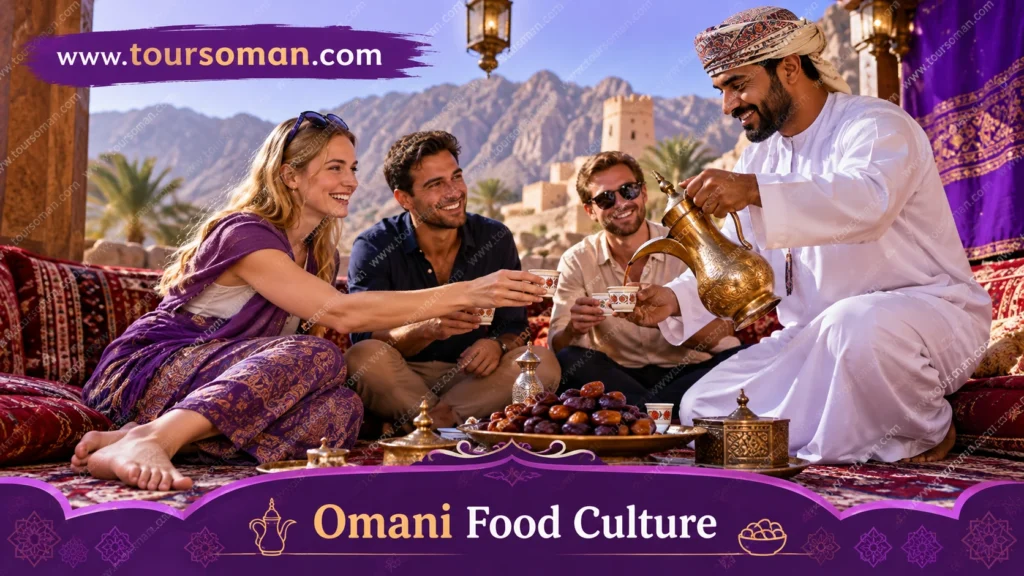
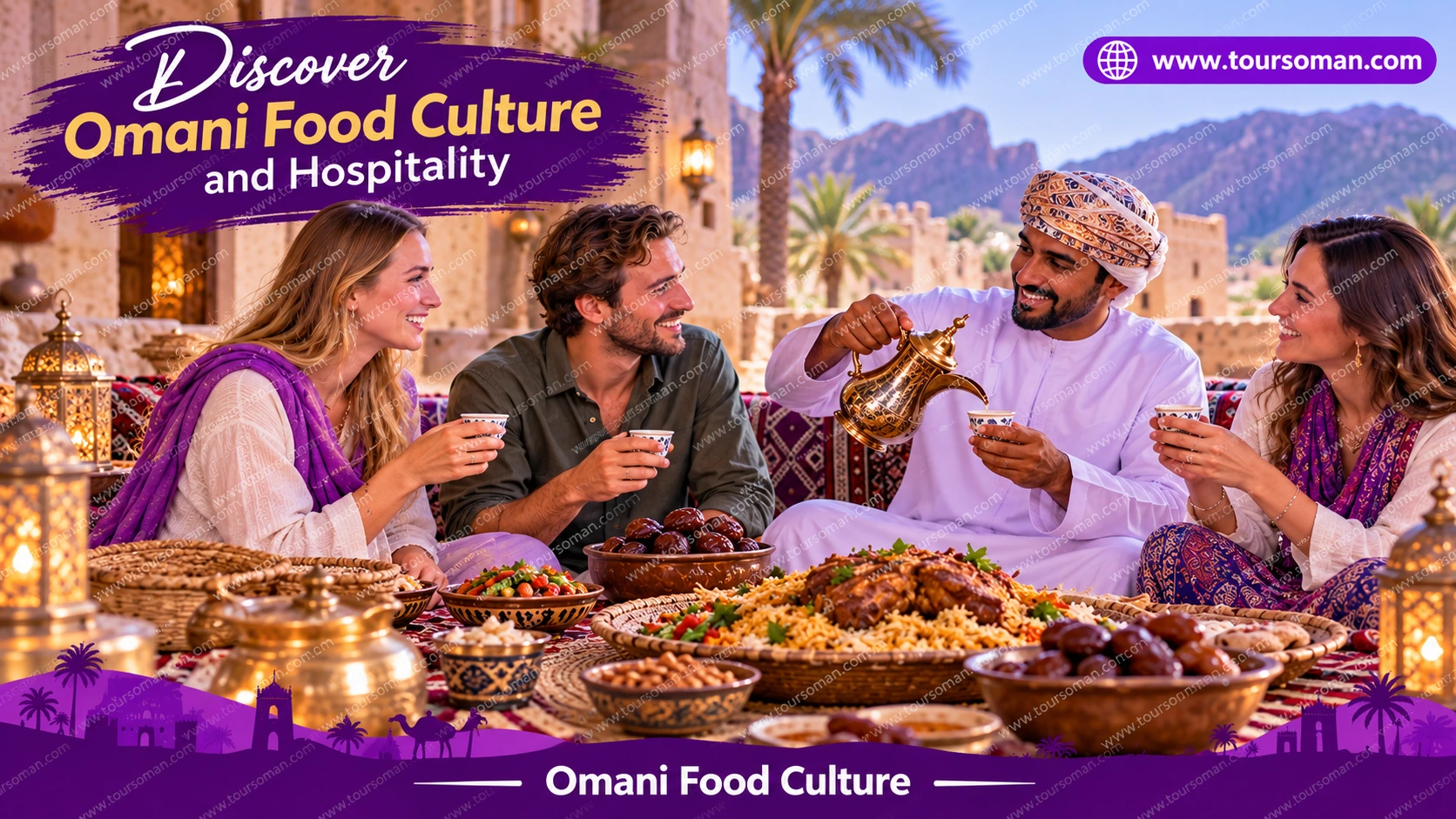
Omani coffee and the tradition of hospitality
Omani coffee, commonly called kahwa or qahwa, is one of the country’s most recognizable hospitality traditions. It is often served in small cups alongside dates and sometimes Omani halwa.
The coffee is commonly flavored with cardamom, although recipes can include other spices. It is traditionally poured from a metal coffee pot known as a dallah.
H3: How to Accept Omani Coffee
When coffee is offered, take a small cup if you would like one and enjoy it at your own pace. Your host may offer a refill.
When you have had enough, gently tilt or shake the cup to indicate that you do not want more. The precise gesture can vary, so follow the server’s example.
H3: Why Are Dates Served with Coffee?
Dates have long been an important food in the region. Their natural sweetness pairs well with the warm, lightly spiced flavor of traditional coffee.
Omani halwa is another common accompaniment, especially during celebrations and visits. Different shops may have their own recipes, making it interesting to sample more than one variety.
H3: Where Can You Discover These Traditions?
Traditional markets are useful places to explore dates, sweets, spices and locally made products. During your time in Muscat, consider visiting Muttrah Souq as part of a cultural sightseeing day.
You can begin planning your itinerary through ToursOman’s Oman tours. Check the individual tour details before assuming that market visits or food tastings are included.
H2: Mealtimes and Eating Habits in Oman
Mealtimes vary between households, restaurants and travel schedules. Visitors should avoid assuming that every restaurant follows the same timetable.
| 🍽️ Meal | 🥘 What you may find | 💡 Visitor advice |
| 🌅 Breakfast | 🍞 Bread, eggs, tea and other local or international choices | ⏰ Check hotel and café opening hours |
| ☀️ Lunch | 🍚 Rice, meat, fish and other filling dishes | 😌 Allow enough time for a relaxed meal |
| 🌙 Dinner | 🍛 Traditional Omani meals and international cuisine | 🕒 Check restaurant hours in advance |
| ☕ Coffee and sweets | 🌴 Coffee, dates and sometimes halwa | 🤝 Enjoy these when offered during a cultural visit |
H2: How to Plan Meals Around Sightseeing
If you are taking a full-day tour, check whether lunch is included or not before departure. Some tours include a meal, while others allow you to choose a restaurant independently.
Before booking, confirm:
- 🕒 Departure and return times.
- 🍽️ Whether lunch, snacks and drinks are included.
- 📍 Whether there are suitable places to stop for food.
- 🥗 Whether dietary requests can be accommodated.
For a longer holiday, Oman packages from ToursOman can help you explore available travel options. Check the details of your chosen package to understand its inclusions and schedule.
H2: Food Differences Across Oman
Oman includes coastal towns, mountain villages, desert communities and southern landscapes. Food traditions reflect these different environments, local ingredients and historical connections.
H3: Muscat: A Variety of Local Food
Muscat offers visitors a wide choice of traditional restaurants, cafés, markets and international dining options. It is a convenient place to begin exploring Omani rice dishes, grilled meat, seafood, sweets and coffee.
Ideal for: 🧭 First-time visitors and travelers with limited time ⏳
Discover our guided Muscat day tours to plan your time in the capital.
H3: Nizwa: Traditional Markets and Local Life
Nizwa is known for its historic setting and traditional market. A visit to Nizwa souq offers an opportunity to discover dates, spices, local products and the food traditions of Oman’s interior.
Ideal for: 🏛️ Travelers interested in heritage, 🛍️ markets, and 🇴🇲 traditional life.
Browse Best things to do in Nizwa Oman when planning a trip that includes Nizwa and other destinations.
H3: Salalah: Southern Omani Flavors
Salalah, in the southern region of Dhofar, has its own food traditions and historical connections with the Indian Ocean. Depending on the restaurant and season, visitors may find fish, coconut and locally grown produce among the available ingredients.
Ideal for: 🍽️ Travelers who want to combine food with 🌿 southern Oman’s landscapes and 🏛️ cultural attractions.
Discover available Salalah day tours when planning your visit.
H3: Oman’s Coast: Fresh Seafood
Fishing has long been important to coastal communities. Depending on the location and season, restaurants may offer grilled fish and other seafood dishes.
Ideal for: 🦞 Seafood lovers and 🏖️ visitors exploring coastal towns.
These regional descriptions are useful starting points rather than strict boundaries. Recipes and restaurant menus can differ considerably from one place to another.
H2: Where to Experience Traditional Omani Food
You do not need to be invited into a private home to discover Omani cuisine. Several options are suitable for different budgets, interests and travel styles.
H3: 1. Visit a Traditional Omani Restaurant
A traditional restaurant is often the simplest place to begin. You can explore the menu, ask about unfamiliar dishes and enjoy a meal in a comfortable setting.
If you are traveling with friends or family, consider ordering a selection of dishes to share, provided everyone’s dietary requirements are respected.
H3: 2. Explore Local Markets
Markets provide opportunities to discover ingredients that are important to Omani cooking, including dates, spices and sweets.
Muttrah Souq in Muscat is a useful option for visitors interested in traditional products and local shopping. Remember that not every stall sells ready-to-eat meals, so check where you can purchase prepared food.
H3: 3. Sample Coffee, Dates and Halwa
If you have limited time, sampling traditional coffee and sweets is an easy introduction to Omani hospitality.
You can also purchase packaged dates and suitable sweets as gifts. Check ingredient labels and storage advice where necessary.
H3: 4. Add Food Stops to a Sightseeing Trip
A sightseeing day can include more than historic landmarks and scenic viewpoints. A planned stop at a traditional restaurant or market can help you understand local life while exploring the destination.
| 🍽️ Experience | ⏱️ Suggested time | 🎯 Best suited to |
| 🥘 Traditional restaurant meal | Around 1–2 hours | 😋 Visitors wanting to try local dishes |
| 🛍️ Market visit | Around 1–2 hours | 🌿 Travelers interested in ingredients and local products |
| ☕ Coffee and sweets | Around 30–60 minutes | ⏳ Visitors with limited time |
| 🗺️ Food stop during sightseeing | Depending on the itinerary | 📸 Travelers combining culture and sightseeing |
These are planning estimates, not guaranteed tour durations. Travel time, opening hours and restaurant service can change the schedule.
For help planning your trip, visit ToursOman’s website and check which available itineraries suit your interests. Ask whether food stops can be included before booking.
H2: Food Allergies, Dietary Needs and Practical Tips
Trying unfamiliar dishes is part of the enjoyment of travel, but checking ingredients and meal arrangements in advance can help you avoid unnecessary problems.
H3: Tell the Restaurant About Allergies
Some traditional dishes and sweets may contain nuts, dairy, eggs, wheat or other ingredients that cause allergic reactions.
If you have a serious food allergy:
- ⚠️ Explain the allergy clearly before ordering.
- 🥘 Ask about ingredients and how the food is prepared.
- 🍳 Check whether separate cooking equipment is used.
- 🚫 Do not rely on appearance alone to decide whether a dish is safe.
For a severe allergy, consider carrying a translated allergy card and any emergency medication prescribed for you.
H3: Vegetarian and Vegan Options
You may find vegetable dishes, salads, rice, bread, beans and other suitable choices in Oman. However, availability varies between restaurants, and many traditional specialties contain meat.
Ask whether stock, butter, ghee or other animal-derived ingredients are used. A dish that appears vegetarian may still contain meat stock.
H3: Halal Food and Other Dietary Requirements
Halal food is widely available in Oman. However, travelers with specific dietary needs should still check individual ingredients and preparation methods.
If you avoid particular foods for religious, personal or medical reasons, explain your requirements when arranging a meal or booking a tour.
H2: What About Omani Food Prices?
Prices depend on the restaurant, location, portion size and type of meal. A casual local restaurant will generally offer a different price level from a hotel restaurant.
| 🍽️ Dining option | 💰 What affects the cost? |
| 🥘 Casual local restaurant | 📍 Dish, portion and location |
| 🍖 Traditional specialty restaurant | 🌿 Ingredients and preparation |
| 🏨 Hotel restaurant | ⭐ Hotel level, menu and service |
| ☕ Coffee and sweets | 🍯 Product, portion and place of purchase |
Check the current menu or ask the restaurant directly rather than relying on one estimated price for the whole country.
Before booking a tour: Confirm whether meals are included, whether drinks cost extra and whether dietary requests can be accommodated. For assistance with available arrangements, contact ToursOman.
H2: How to Combine Omani Food Culture with Your Tour

Discover Oman through food and travel
A rewarding Oman itinerary can combine local food with sightseeing, heritage and natural scenery. The best plan depends on your interests, available time and preferred travel style.
H3: Option 1: A Cultural Day in Muscat
Suggested duration: One full day.
Explore Muscat’s cultural landmarks, visit a traditional market and allow time for a local lunch or coffee stop.
This option is suitable for first-time visitors who want an introduction to Omani food and culture without travelling far from the capital.
Explore Muscat day tours.
H3: Option 2: Nizwa and Oman’s Heritage
Suggested duration: One day, depending on your departure point.
Discover historic architecture and traditional markets, with time to sample regional food where available.
This option is suitable for travelers interested in Omani history and everyday traditions.
Browse Nizwa Tour from Muscat.
H3: Option 3: Salalah and Southern Oman
Suggested duration: One or more days.
Combine the region’s natural attractions with time to explore local restaurants and discover the food traditions of Dhofar.
This option is suitable for visitors planning a longer stay in southern Oman.
Explore Salalah day tours.
H2: What to Check Before Choosing a Tour
Before confirming your booking, ask:
- 🗺️ Does the itinerary include the destinations you want to visit?
- 🚗 How long will you spend traveling between stops?
- 🍽️ Are lunch, refreshments and entrance fees included?
- 🥗 Can the itinerary accommodate your dietary needs?
- 👥 Is the tour private or shared?
- 💳 What are the booking, payment and cancellation conditions?
- ⏰ Is there enough time to enjoy meals without rushing?
H2: Why Arrange Your Itinerary with a Local Tour Operator?
A local operator can help you understand travel times, choose suitable sightseeing stops and clarify practical details before your trip. This can be particularly useful if you plan to visit several destinations or have limited time.
ToursOman offers tour options for destinations including Muscat, Salalah and Khasab. The exact inclusions, prices and available arrangements depend on the tour selected, so confirm the details before paying.
Start with ToursOman’s main website to explore available trips and compare the itineraries that best fit your travel plans.
H2: A Practical Example: Planning a Day Around Local Food
Imagine a couple visiting Muscat for the first time who want to discover Omani culture without spending the entire day in restaurants.
A practical plan could include:
- 🌅 Begin with a morning sightseeing visit.
- 🛍️ Explore a traditional market and browse local spices and sweets.
- 🍛 Enjoy lunch at a restaurant serving Omani dishes.
- ☕ Try coffee and dates in the afternoon.
- 🏨 Return to the hotel or continue sightseeing if time allows.
This is an illustrative itinerary, not a report of an actual customer’s experience or a verified ToursOman package. Adjust the order of stops according to opening hours, travel distances and your chosen tour.
The key is to plan food as part of the journey rather than treating it as an afterthought. This creates a more relaxed day and allows you to experience more of Oman’s culture.
H2: Conclusion: Discover Oman Through Its Food
Omani food culture offers visitors more than new flavors. It provides a window into the country’s hospitality, family traditions, regional differences and everyday life.
From slow-cooked shuwa and fragrant rice dishes to sweet halwa and traditional coffee, each experience can help you understand Oman a little better.
The best approach is to combine food with the places and traditions that interest you most. Plan enough time for relaxed meals, check dietary requirements in advance and approach local customs with curiosity and respect.
Ready to plan your trip? Visit ToursOman to explore available tours and build an itinerary that combines sightseeing, culture and memorable local experiences.
H2: Frequently Asked Questions about Omani food culture
H3: What Is Omani Food Culture Known For?
Omani food culture is known for traditional rice and meat dishes, seafood, aromatic spices, dates, halwa and coffee. Hospitality and sharing food are important parts of many local customs.
H3: What Is the Most Famous Traditional Food in Oman?
Shuwa is one of Oman’s best-known traditional dishes. It consists of marinated meat cooked slowly, traditionally in an underground oven, and is often associated with celebrations and family gatherings.
H3: What Are the Dining Customs in Oman?
Common customs include using the right hand when eating traditionally, sharing food in some settings, accepting refreshments graciously and following your host’s example when dining in a private home.
H3: Is It Rude to Refuse Omani Coffee?
Not necessarily. Accepting coffee is a polite way to appreciate Omani hospitality, but you can politely decline if you have a health concern, dislike coffee or simply do not want any.
H3: What Do Omanis Serve with Traditional Coffee?
Omani coffee is commonly served with dates and may also be accompanied by halwa. These foods are closely connected with welcoming guests and celebrating special occasions.
H3: Is Omani Food Spicy?
Omani food often uses aromatic spices such as cardamom, cinnamon, cloves and turmeric. The level of heat varies by dish, and many traditional meals are fragrant rather than very hot.
H3: Are Vegetarian Meals Available in Oman?
Yes, vegetarian options are available in many restaurants, although the choices vary. Ask whether rice, sauces and vegetable dishes contain meat stock, ghee or other ingredients you avoid.
H3: What Should Tourists Eat in Muscat?
Visitors can look for shuwa, qabooli, harees, mishkak, seafood, Omani halwa and traditional coffee. Availability depends on the restaurant and the day.
H3: Can I Experience Omani Food During a Sightseeing Tour?
You can plan restaurant visits; market stops and traditional refreshments around your sightseeing itinerary. However, meals and food experiences are not automatically included in every tour, so confirm the arrangements before booking.
Explore ToursOman’s Muscat day tours to plan your visit.
H3: What Should I Know About Food During Ramadan in Oman?
During Ramadan, eating and drinking in public during daylight hours are prohibited. Restaurant opening hours and meal arrangements may differ, so check current local guidance before traveling.
H3: What Is the Best Way to Experience Authentic Omani Food?
Start with a traditional restaurant, try local dishes and visit markets selling dates, spices and sweets. If your schedule allows, include food stops in an itinerary that explores Oman’s heritage and local communities.
Written by: Toursoman Author