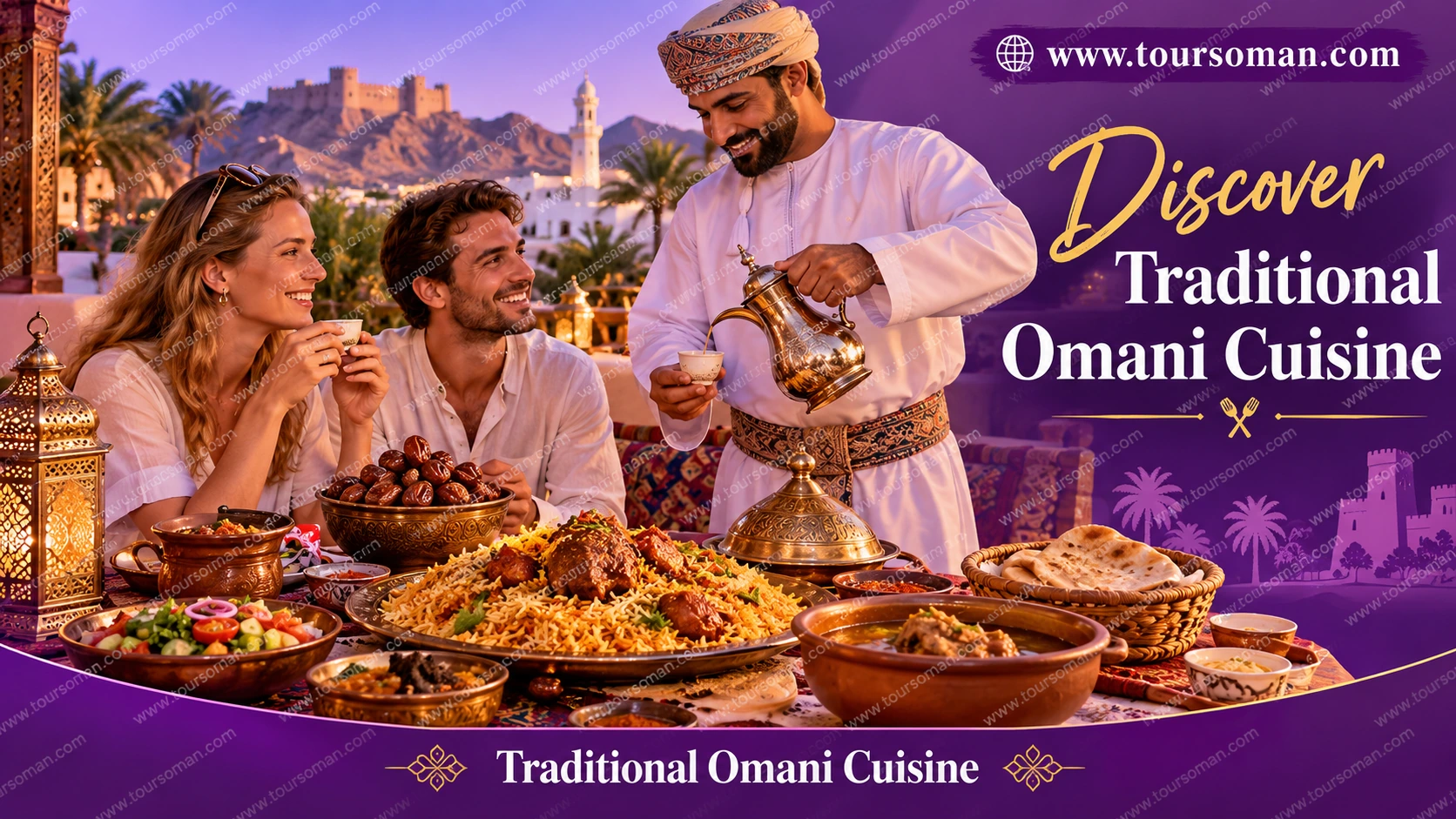
Traditional Omani Cuisine: History and Ingredients
H2: Discover the Story Behind Omani Food
Traditional Omani cuisine is more than a collection of recipes. It tells the story of Oman’s history, coastal communities, desert life, farming traditions and centuries of trade. From fragrant rice and slow-cooked meat to fresh seafood, dates and Omani coffee, every dish offers a glimpse into the country’s rich culture.
For travelers visiting Oman, discovering local food is an excellent way to experience the country beyond its mountains, beaches and historic forts. Sharing a traditional meal or enjoying Omani coffee with dates can introduce you to customs that remain an important part of everyday life.
Omani cuisine combines local ingredients with influences from India, East Africa and other parts of the Arabian Peninsula. Rice, fish, meat, wheat, dates and aromatic spices all have important roles, although recipes vary between regions and families.
If you are planning a cultural holiday, consider combining local food experiences with sightseeing. Explore ToursOman’s Oman tours to discover the country’s heritage, landscapes and traditions.
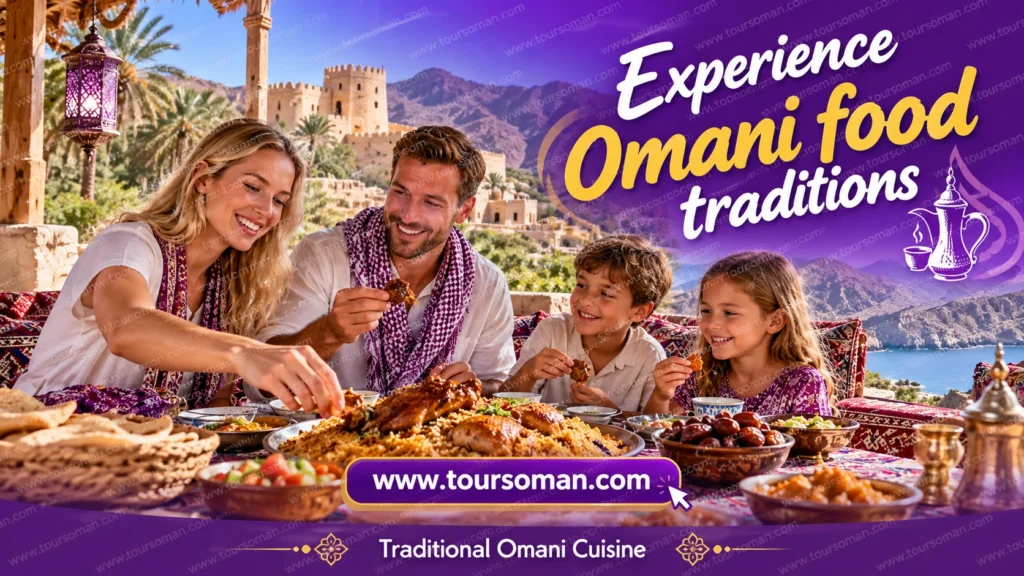
Experience Omani food traditions
In this guide, you will learn about:
- 🏺 The history and development of Omani cuisine.
- 🌿 The main ingredients used in traditional cooking.
- 🍚 Famous Omani dishes worth trying.
- ☕ The cultural importance of coffee, dates and sweets.
- 🧭 How to plan a trip that includes authentic local food experiences.
H2: The History of Traditional Omani Cuisine
Omani cuisine developed over many centuries, shaped by the country’s environment, trading connections and local traditions. Its food culture reflects the relationship between the sea, the desert, agricultural communities and neighboring countries.
H3: Early Food Traditions and Daily Life
In earlier times, Omani families depended heavily on ingredients available in their surroundings. Coastal communities relied on fishing, while inland communities made use of dates, grains, dairy products and livestock.
Cooking methods were practical and suited to local conditions. Families prepare food by boiling, grilling, baking and slow cooking. Dates provided an important source of food, while bread, grains and meat helped form filling daily meals.
These traditions established the foundations of Omani home cooking, many elements of which remain popular today.
H3: The Influence of Maritime Trade
Oman’s location along the Arabian Sea and the Gulf of Oman made it an important participant in Indian Ocean trade. For centuries, Omani traders traveled between Arabia, India, East Africa and other coastal regions.
Trade brought more than commercial goods. It also encouraged the exchange of ingredients, spices and cooking methods. Rice and spices became important parts of many dishes, combining local ingredients and established cooking traditions.
This history helps explain why Omani cuisine features aromatic seasonings such as cardamom, cinnamon, cloves and turmeric alongside fish, dates and meat.
H3: Indian and East African Connections
Oman’s historic connections with India and East Africa helped shape its varied food culture. Rice dishes, spice combinations and different cooking techniques reflect centuries of contact between communities.
Oman’s historical relationship with Zanzibar is another important part of this story. The movement of people and goods helped create cultural connections that can still be seen in food and other traditions.
However, Omani cuisine has its own identity. Local ingredients, family recipes and regional customs transformed these influences into dishes associated with Oman.
H3: Traditional Cooking in Modern Oman
Today, traditional Omani dishes remain important at family gatherings, weddings, religious celebrations and special occasions. Some recipes require hours of preparation, while others are suitable for everyday meals.
Shuwa, harees, majboos and Omani halwa are examples of foods that continue to represent the country’s culinary heritage.
For visitors, trying these dishes provides an opportunity to understand Omani culture through something familiar to everyone: food. A guided cultural visit can add context by explaining local customs and the history of the places you explore.
H2: How Geography Shaped Omani Food
Oman’s geography has had a major influence on its food traditions. Coastal areas, mountain villages, agricultural regions and desert communities have different ingredients available to them, resulting in varied regional cooking styles.
H3: Coastal Communities and Seafood
🐟🍤 Fish and seafood are important in many coastal communities. 🔥 Grilling and cooking fish with rice 🍚 and local seasonings 🌿 are familiar ways of preparing meals.
Travelers visiting Muscat or other coastal destinations can look for grilled fish, seafood rice and other locally prepared dishes. Availability depends on the location, season and restaurant.
You can combine coastal sightseeing with cultural experiences through Muscat day tours.
H3: Mountain and Inland Communities
🌴 Inland communities have traditionally relied on dates, grains, livestock 🐐, dairy products 🥛🧀, and locally grown agricultural produce.
These ingredients support hearty meals, breads and dishes suited to family gatherings. Farming conditions and local customs influence the ingredients used in different areas.
H3: Desert and Rural Food Traditions
🏜️ In rural and desert areas, meat, dates, and 🌾 grain-based meals have traditionally played important roles.
Slow cooking is particularly associated with festive dishes such as shuwa, in which meat is cooked for an extended period to develop a tender texture.
These cooking methods reflect the importance of sharing food during celebrations and gatherings.
Understanding these regional differences can help you plan a more interesting trip. Consider Oman holiday packages if you want to explore more than one destination during your stay.
H2: Essential Ingredients in Omani Cuisine
Traditional Omani cooking combines staple foods, fresh ingredients and aromatic spices. The exact ingredients depend on the dish, the region and the cook’s family recipe.
H3: Main Ingredients and Their Uses
| Ingredient | Common use in Omani cuisine | Contribution to the dish |
| 🍚 Rice | Served with meat, chicken or fish | Creates a filling main meal |
| 🐟 Fish | Grilled, baked or cooked with spices | Provides fresh, savory flavors |
| 🥩 Lamb and goat | Roasted, slow-cooked or served with rice | Adds richness and tenderness |
| 🌴 Dates | Served as snacks or with coffee | Provides natural sweetness |
| 🌾 Wheat | Used in harees and traditional breads | Creates a hearty texture |
| 🧅 Onions and garlic | Used in many savory recipes | Adds depth of flavor |
| 🌿 Cardamom and cinnamon | Used in selected dishes and drinks | Adds warm, fragrant notes |
| 🌶️ Turmeric and cumin | Used in spice blends | Adds color and earthy flavor |
| 🧈 Ghee | Used in selected rice dishes and sweets | Provides richness |
| 🌹 Rosewater and saffron | Used in some sweets and festive dishes | Adds fragrance and color |
Not every dish contains all these ingredients. Traditional recipes differ between households, and modern restaurants may adapt recipes to suit their customers.
H3: Why Spices Matter in Omani Cooking
Spices are important because they give Omani dishes their distinctive aroma and flavor. Many recipes combine several spices instead of relying on strong chili heat.
- Cardamom adds fragrance to coffee and selected dishes.
- Cinnamon provides warmth to some rice and meat recipes.
- Turmeric gives food a golden color and earthy flavor.
- Cloves contribute a strong, aromatic taste.
- Cumin adds depth to selected savory dishes.
The goal is often to create a balanced flavor rather than a very hot dish. If you prefer mild food, ask the restaurant about the seasoning before ordering.
H3: Local Ingredients and International Trade
Oman’s cuisine reflects both local resources and international trade. Fish, dates and agricultural products are associated with the country’s coastal and farming communities, while rice and many spices have historically arrived through trade.
This combination explains why traditional Omani meals can include ingredients from different parts of the world while maintaining a distinctly local character.
When exploring Omani markets, look for dates, spices and traditional sweets. These products can also help you understand the ingredients used in local cooking.
H2: Traditional Omani Dishes You Should Try
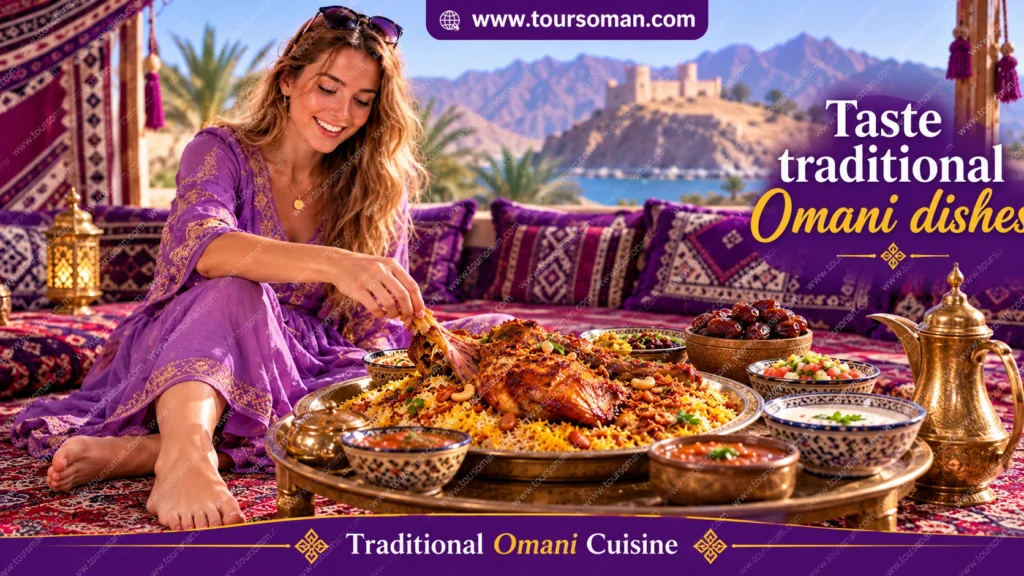
Taste traditional Omani dishes
If this is your first visit to Oman, begin with a few well-known dishes. Trying different meals allows you to experience the variety of flavors, textures and cooking methods found in the Omani food culture.
H3: 1. Shuwa
Shuwa is one of Oman’s most famous traditional dishes. It is commonly prepared using lamb or goat seasoned with spices, wrapped and cooked slowly in an underground oven or pit.
The extended cooking time makes the meat tender and allows the seasoning to develop a rich flavor. Shuwa is particularly associated with celebrations and special gatherings.
Best for: Travelers interested in traditional celebrations and slow-cooked meat.
Travel tip: Shuwa may not be available every day. Ask restaurants or local hosts whether it will be served during your visit.
H3: 2. Majboos
Majboos, also known in some places as maqboos, is a fragrant rice dish commonly served with chicken, lamb or fish. The rice absorbs flavors from the cooking liquid and spices.
It is a useful introduction to Omani cuisine because it combines familiar ingredients with regional seasoning.
Best for: Visitors looking for a satisfying traditional lunch or dinner.
Travel tip: Ask about the available meat or fish options and whether the dish contains nuts or other ingredients you need to avoid.
H3: 3. Harees
Harees is prepared by cooking wheat and meat together until they form a soft, thick mixture. The dish has a comforting texture and is associated with family occasions and religious celebrations.
Although the ingredients are relatively simple, preparing harees can take time because the wheat and meat need to cook until they blend together.
Best for: Travelers who enjoy hearty meals with a soft texture.
H3: 4. Mishkak
Mishkak consists of seasoned pieces of meat threaded onto skewers and grilled over a flame. It is associated with casual outdoor eating and food stalls.
The grilling gives the meat a smoky flavor, while the seasoning adds depth.
Best for: Visitors who want to try local grilled food in a relaxed setting.
Travel tip: Ask which meat is used and whether the seasoning contains chili if you prefer milder flavors.
H3: 5. Traditional Omani Grilled Fish
Fish is an important part of coastal Omani food traditions. Depending on the location and availability, restaurants may serve different local fish grilled with seasonings and accompanied by rice, salad or sauces.
The preparation is often simple enough to let the fish’s flavor stand out.
Best for: Seafood lovers visiting Muscat, Sur or Salalah.
Travel tip: Ask which fish is available that day rather than assuming every restaurant serves the same type.
H3: 6. Qabooli
Qabooli is a rice-based dish that may combine meat, aromatic spices, nuts and raisins. Recipes differ, giving the dish variations in flavor and texture.
It is a good choice for travelers who enjoy fragrant rice with a combination of savory and slightly sweet notes.
Best for: Visitors who want to explore the variety of traditional rice dishes.
H3: 7. Omani Halwa
Omani halwa is a rich traditional sweet commonly made with sugar, starch or semolina, ghee and flavorings such as rosewater, saffron and spices. Some recipes also contain nuts.
It is often served to guests alongside Omani coffee, making it an important part of the country’s hospitality traditions.
Best for: Travelers interested in traditional sweets and local customs.
Travel tip: Check the ingredients if you have allergies, especially to nuts.
H3: Traditional Omani Dishes Compared
| 🍽️ Dish | 🥘 Main ingredients | 😋 Flavor and texture | 🎉 Best occasion |
| 🍖 Shuwa | Lamb or goat, spices 🌿 | Tender and rich 🤤 | 🎊 Celebrations |
| 🍛 Majboos | Rice, spices, meat or fish 🐟 | Fragrant and filling 😋 | 🍽️ Lunch or dinner |
| 🥣 Harees | Wheat and meat 🥩 | Soft and hearty ❤️ | 👨👩👧👦 Family gatherings |
| 🍢 Mishkak | Seasoned meat 🥩 | Smoky and grilled 🔥 | 😎 Casual meals |
| 🐟 Grilled fish | Fish and seasonings 🌿 | Fresh and savory 😋 | 🌊 Coastal dining |
| 🍚 Qabooli | Rice, meat, spices, optional nuts or raisins 🥜 | Fragrant with varied textures 😍 | 🍽️ Main meals |
| 🍮 Omani halwa | Sugar, starch or semolina, ghee and flavorings 🍯 | Sweet and rich 😋 | ☕ Hospitality and celebrations |
For a first taste of traditional Omani food, try majboos or grilled fish as a main meal, followed by halwa and coffee. If you have more time, explore other dishes to discover how ingredients and preparation methods vary.
H2: Omani Food Across Different Regions
Oman’s regions offer different cultural experiences, and food is one way to discover these differences. A trip that includes more than one destination can reveal a wider range of local ingredients and traditions.
H3: Muscat: Traditional Food and Modern Dining
Muscat is a practical starting point for visitors who want to explore traditional restaurants, seafood and local sweets alongside museums, historic sites and coastal attractions.
You can look for majboos, grilled fish, mishkak, halwa and Omani coffee. Restaurants range from casual local establishments to more formal dining settings.
Explore Muscat day tours to plan your sightseeing and leave enough time to enjoy local food.
H3: Salalah: Coastal Flavors and Dhofari Traditions
Salalah, in southern Oman, has its own food traditions shaped by coastal life, local agriculture and historical connections with East Africa.
Fish and seafood are important, while regional ingredients and family recipes give Dhofari food its distinctive character.
During the Khareef season, the area’s green landscapes create another reason to explore the region. Browse Salalah day tours to combine sightseeing with opportunities to discover local culture.
H3: Nizwa and the Omani Interior
Nizwa is known for its historic fort, traditional market and connections with inland Omani culture.
Visitors can explore dates, traditional products, local sweets and regional dishes while learning about the history of the interior.
Read what Nizwa is known for before planning a visit.
H3: Regional Food Comparison
| 📍 Destination | 🍽️ Food and culture to explore | 🧭 Suggested travel focus |
| 🇴🇲 Muscat | 🐟 Traditional restaurants, seafood and ☕ coffee | 🏙️ City sightseeing and 🕌 culture |
| 🌿 Salalah | 🦐 Coastal food and Dhofari traditions | 🌳 Nature and local culture |
| 🏰 Nizwa | 🌴 Dates, traditional products and 🍲 inland food | 🏛️ Heritage, forts and 🛍️ markets |
| 🏞️ Khasab | 🐟 Coastal seafood and local dining | 🚤 Sea trips and ⛰️ mountain scenery |
Food availability varies by restaurant, season and day. If a particular dish is important to you, ask about it before finalizing your itinerary.
H2: Omani Hospitality: Coffee, Dates and Sweets
In Oman, offering refreshments is more than a way to welcome visitors. It expresses generosity, respect and a desire to make guests feel comfortable.
H3: Omani Coffee and Dates
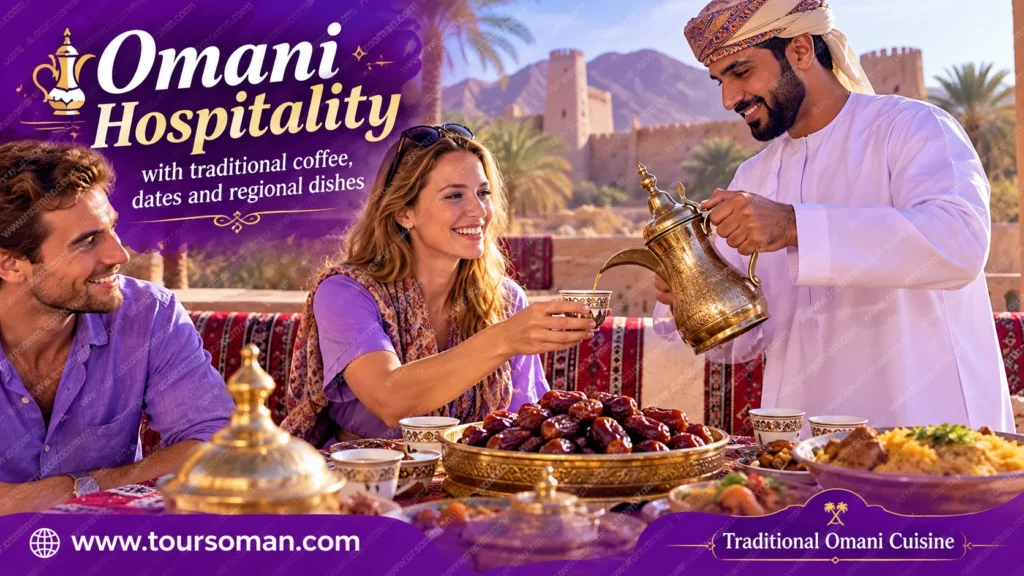
Coffee, dates and Omani hospitality
Omani coffee, often called kahwa, is commonly flavored with cardamom and served in small cups. Dates are a familiar accompaniment.
Coffee and dates are offered during visits, celebrations and other social occasions. Halwa may also be served as part of a traditional welcome.
To appreciate this custom:
- ☕ Accept a small cup of coffee if you would like to participate.
- 🌴 Try a date alongside your coffee.
- 🍮 Sample halwa if it is offered and the ingredients suit your dietary needs.
- 🤝 Follow your host’s lead when it comes to serving and eating.
These simple moments can help you understand Omani hospitality more personally than sightseeing alone.
H3: Why Omani Halwa Is Worth Trying
Omani halwa is one of the country’s best-known sweets. Its texture is usually soft, thick and rich, with flavorings that may include rosewater, saffron, cardamom and nuts.
Unlike a light cake or biscuit, it is often served in small portions and shared with coffee.
If you enjoy discovering food traditions, try halwa as part of a wider cultural visit rather than treating it as just another dessert to buy.
H2: How to Experience Traditional Omani Food During Your Trip
Reading about traditional food is useful but tasting it in the right setting can make the experience much more memorable.
H3: Visit Local Markets
Markets as Old Mutrah Market in Muscat introduce visitors to dates, spices, sweets and other regional products. They also provide opportunities to observe everyday shopping and local traditions.
Allow time to browse rather than treating a market as a quick stop. If you plan to take food products home, check the rules for carrying them into your destination country.
H3: Choose Restaurants Serving Omani Dishes
Not every restaurant in Oman specializes in traditional cuisine. Check the menu or contact the restaurant beforehand to ask which dishes are available.
Look for menus that explain the ingredients and preparation methods. This is particularly useful if you have allergies or dietary restrictions.
H3: Explore Food as Part of a Guided Cultural Visit
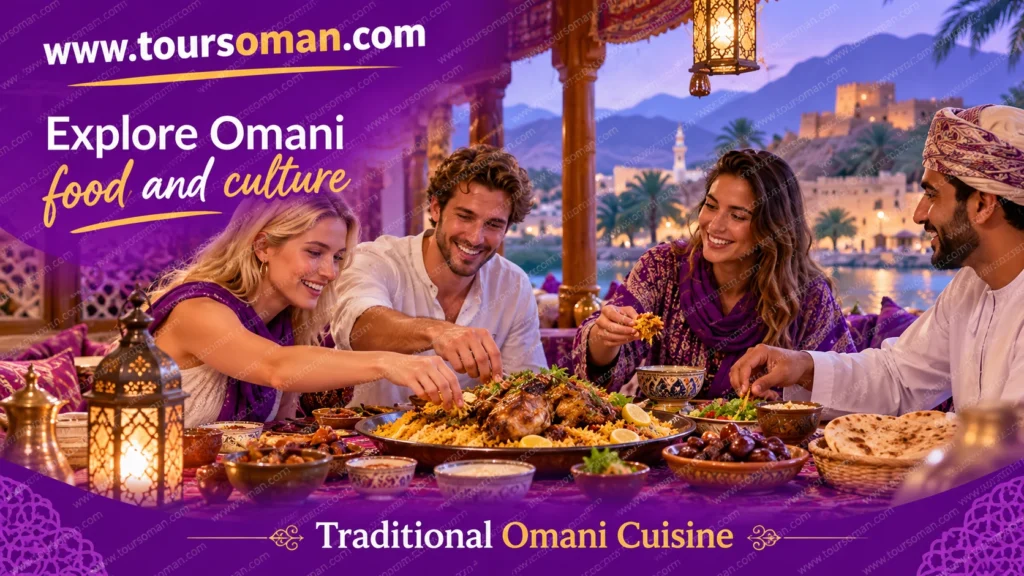
Explore Omani food and culture
A local guide can help explain regional dishes, hospitality customs and the history of the places you visit.
A guided tour can be useful if you have limited time or are visiting Oman for the first time. It can help you organize cultural attractions while leaving room for local meals.
Explore ToursOman’s available tours to plan your trip. Confirm whether food tastings, meals or restaurant stops are included, because these services should not be assumed unless specified in the tour details.
H3: Visit a Food Festival When Possible
Food festivals can offer opportunities to sample several dishes, see cooking demonstrations and meet local food producers.
For example, Oman’s Ministry of Heritage and Tourism reported that the 2024 Omani Culinary Arts Festival in Salalah attracted more than 50,000 visitors over five days and involved over 34 local small and medium-sized businesses.
Festival dates and activities can change each year, so check the latest schedule before planning your trip around a particular event.
H2: Choosing the Right Oman Tour for a Food and Culture Trip
If you want to discover Omani cuisine while seeing the country’s most interesting places, choose a tour that matches your interests, available time and budget.
H3: Which Tour Is Right for You?
| 🎯 Your travel goal | 🧭 Tour option | ⭐ Why it may suit you |
| 🕌 Discover the capital and local culture | 🏙️ Muscat Day Tours | 📍 A convenient starting point for cultural sightseeing |
| 🌴 Explore southern Oman | 🌿 Salalah Day Tours | 🏞️ Combines regional scenery with opportunities to explore local culture |
| 🏰 Visit historic inland attractions | 🇴🇲 Oman Tours | 🗺️ Useful for planning a wider itinerary |
| 🧳 Combine several destinations | 🎒 Oman Packages | 📅 Helps organize a multi-day holiday |
| 🌊 Explore the northern coast by sea | 🚤 Oman Sea Trips | 🐬 Adds a maritime experience to your trip |
These are starting points for planning. Check the details of each tour to confirm its itinerary and whether it includes any food-related experiences.
H3: What to Check Before Booking
Before choosing your tour, consider the following:
- Duration: Does the tour leave enough time for meals and relaxed sightseeing?
- Inclusions: Are transport, guide services, entrance fees or meals included?
- Food preferences: Can the operator advise on vegetarian, seafood or other dietary options?
- Group size: Is the experience suitable for your family or travel group?
- Pickup arrangements: Is the meeting point convenient for your accommodation?
- Price: What is included in the quoted amount, and are additional charges expected?
- Cancellation terms: What flexibility is available if your plans change?
Tour prices depend on the destination, duration, group size and services included. Check the current price and inclusions on the relevant tour page rather than relying on a general estimate.
H3: When Should You Book?
For popular travel dates, school holidays and major festivals, booking ahead can give you more choice. During quieter periods, you may have more flexibility, but availability should still be confirmed.
Before finalizing your plans, confirm the date, pickup arrangements, tour duration and any special requests.
H2: Dietary Restrictions and Allergy Tips for Travelers in Oman
Navigating traditional Omani cuisine with dietary restrictions or food allergies is quite manageable with a bit of preparation. While Omani food heavily features meat, rice, and aromatic spices, modern establishments and local hosts are increasingly accommodating to diverse dietary needs.
H3: Gluten-Free Options
🌾 Many core Omani dishes, such as Majboos, Shuwa, and freshly grilled seafood with rice, are naturally gluten-free as they rely primarily on rice, spices, and fresh herbs. However, be cautious with dishes like Harees (which is wheat-based) and traditional breads. Always inform your server or tour guide if you have celiac disease or gluten sensitivity.
H3: Nut and Sesame Allergies
🥜 Nuts (such as almonds, pistachios, and pine nuts) and sesame seeds are frequently used as garnishes in rice dishes like Qabooli or as key ingredients in Omani Halwa. If you have a severe nut allergy, kindly ask the restaurant to prepare your meal without nut garnishes and confirm the ingredients in local sweets before tasting.
H3: Vegetarian and Vegan Travelers
🌱 While meat and fish take center stage in traditional Omani cooking, vegetarians can easily find flavorful options including fresh salads (like Tabouleh and Fattoush), hummus, lentil soups, vegetable curries, spiced rice, and fresh tropical fruits. When dining, verify whether rice dishes or vegetable gravies are cooked with meat broth or ghee if you strictly follow a vegan diet.
H2: Plan Your Omani Food Cultural Experience
Traditional Omani cuisine offers a delicious way to understand the country’s history, hospitality and regional identity. Whether you want to try shuwa, enjoy freshly grilled fish, taste Omani halwa or discover the traditions behind coffee and dates, make room for local food during your visit.
Explore ToursOman’s Oman tours and choose a trip that fits your travel plans. Confirm the itinerary and inclusions before booking so you can enjoy your time in Oman with confidence.
H2: Frequently Asked Questions About Traditional Omani Cuisine
H3: What Is Traditional Omani Cuisine?
Traditional Omani cuisine is the country’s food culture, shaped by local ingredients, family traditions, regional environments and historical trade. It includes rice dishes, meat, fish, wheat-based foods, dates, sweets and aromatic spices.
H3: What Is the Most Famous Omani Dish?
Shuwa is one of the best-known traditional dishes. It consists of seasoned meat cooked slowly, often in an underground oven or pit, and is associated with celebrations and special gatherings. Majboos is another popular choice for visitors who want to try a traditional rice-based meal.
H3: What Ingredients Are Commonly Used in Omani Food?
Common ingredients include rice, fish, lamb, goat, wheat, dates, onions, garlic and spices such as cardamom, cinnamon, cloves and turmeric. Ingredients vary depending on the recipe and region.
H3: Is Omani Food Very Spicy?
Not necessarily. Many dishes use fragrant spices for aroma and flavor rather than strong chili heat. If you prefer mild food, ask the restaurant about the seasoning before ordering.
H3: Is Vegetarian Food Available in Oman?
Yes, although availability depends on the restaurant and location. You may find rice dishes, salads, vegetables, breads, dates and other plant-based foods. Ask about meat stock, butter and ghee if you follow a strict vegetarian or vegan diet.
H3: Is Omani Food Suitable for Children?
Many families enjoy rice, bread, grilled meat and fish dishes that can suit children. Ask for mild seasoning and check for bones, nuts and other ingredients that may be unsuitable for your child.
H3: What Is Omani Halwa Made From?
Recipes vary, but Omani halwa commonly includes sugar, starch or semolina, ghee and flavorings such as rosewater, saffron and spices. Some versions contain nuts.
H3: Why Are Coffee and Dates Important in Oman?
Coffee and dates are traditional symbols of hospitality. Offering them to visitors is a familiar way to express welcome and generosity.
H3: Where Can Travelers Experience Traditional Omani Food?
Travelers can look for local restaurants, markets, food festivals and cultural experiences in destinations such as Muscat, Salalah and Nizwa. A guided sightseeing tour may help you explore local culture but check whether food stops are included before booking.
H3: Can I Combine Food Experiences with Oman Tours?
Yes. You can plan food experiences around cultural sightseeing, coastal trips or a multi-day itinerary. Explore ToursOman’s available tours and confirm directly whether your preferred tour includes meals, tastings or time to visit local restaurants.
H3: What Is the Best Time to Try Traditional Omani Food?
Traditional food is available throughout the year, although specific dishes and festivals may depend on the location, occasion and season. If you want to experience a particular event or festive dish, check availability before traveling.
H3: How Can I Plan a Food-Focused Trip with ToursOman?
Start by choosing your destinations and deciding how much time you want to spend on cultural experiences. Review the available tour details, confirm the inclusions and ask about food-related stops before booking. You can also contact ToursOman with questions about your itinerary.
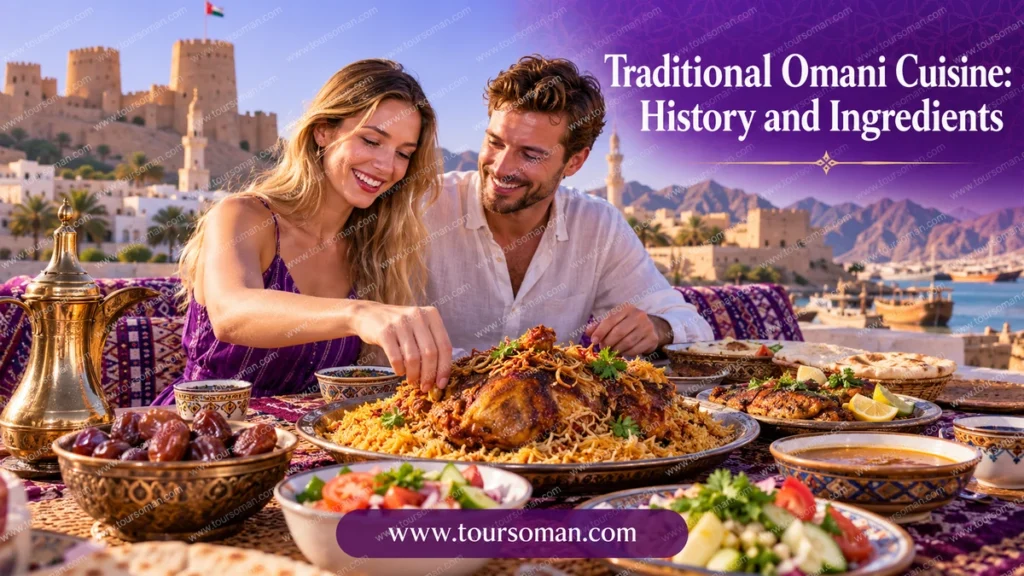
Discover traditional Omani cuisine
Written by: Toursoman Author