Oman UNESCO Heritage Sites: A Guide to History and Culture
Oman UNESCO heritage sites offer a fascinating way to explore the country’s ancient history, traditional architecture, historic trading routes and cultural traditions. From impressive forts and Bronze Age tombs to ancient ports and traditional irrigation systems, these places reveal how Oman developed into an important Centre of trade and culture.
For travelers planning a holiday in Oman, visiting these heritage sites provides an experience beyond beaches, mountains and desert landscapes. You can discover how people lived thousands of years ago, learn about the famous frankincense trade and explore the traditions that continue to shape Omani life today.
Explore Oman’s historic landscapes
But which heritage sites should you visit first? How much time do you need? And how can you combine historical attractions without spending too much time traveling between destinations?
This guide answers these questions and helps you choose the right places for your trip.
If you want to explore Oman’s history with less planning, start by browsing Oman tours and consider a guided itinerary that matches your travel dates, interests and starting location.
H2: What Are the Five Oman UNESCO World Heritage Sites?
According to the official UNESCO World Heritage Centre, Oman has five properties inscribed on the World Heritage List. Each represents a different part of the country’s history and cultural heritage.
| 🏛️ UNESCO Heritage Site | 📅 Year Listed | ✨ Main Attraction |
| 🏰 Bahla Fort | 1987 | Traditional fort and historic settlement |
| 🪦 Bat, Al-Khutm and Al-Ayn | 1988 | Bronze Age settlements and ancient tombs |
| 🌳 Land of Frankincense | 2000 | Frankincense trees, archaeological sites and historic trade |
| 💧 Aflaj Irrigation Systems of Oman | 2006 | Traditional water channels and farming heritage |
| 🏺 Ancient City of Qalhat | 2018 | Historic coastal trading city |
These sites are in different parts of Oman. Some are in the interior, while others are in the south or along the eastern coast.
This means that visiting all five requires careful planning. Rather than rushing between distant locations, choose the sites that interest you most and combine them with nearby attractions.
Planning tip: Decide which region you want to explore before booking transport. This will help you spend more time enjoying the experience and less time on the road.
You can also explore Oman holiday packages to find options for a longer cultural trip.
H2:Bahla Fort: Discover Oman’s Traditional Fortified Town
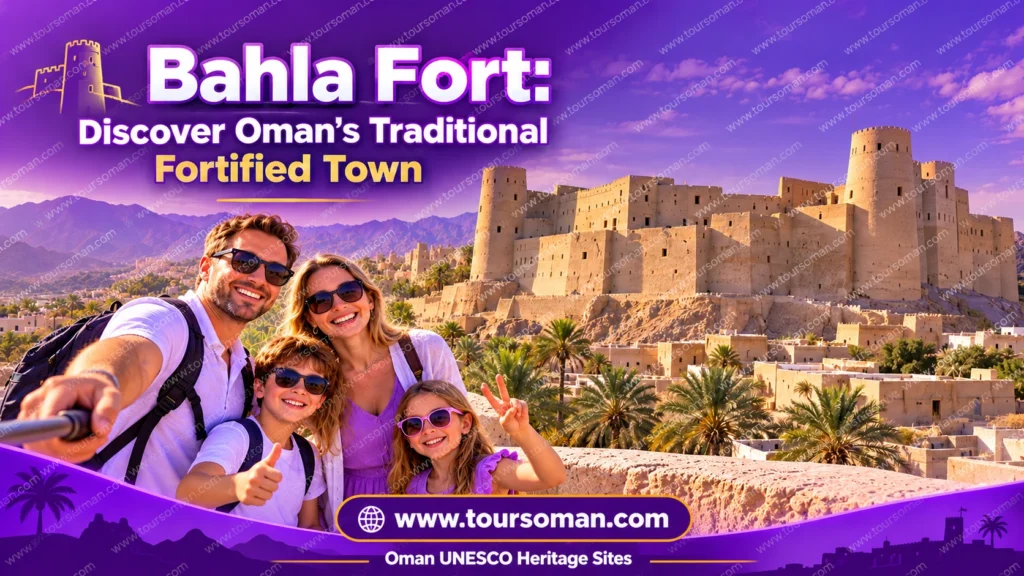
Discover Bahla Fort
Bahla Fort is one of the most recognizable historic landmarks in Oman. Located in the Ad Dakhiliyah region, it reflects the traditional architecture and defensive systems that helped protect Omani communities in the past.
The fort was inscribed on the UNESCO World Heritage List in 1987. Its historic setting is closely connected with the traditional settlement of Bahla and the use of earthen construction.
H3: What Makes Bahla Fort Special?
There are several reasons to include Bahla Fort in your Oman itinerary.
- Traditional architecture: Discover the impressive earthen walls and historic structures.
- Omani history: Learn how fortified settlements helped protect communities and their resources.
- Local culture: Understand the relationship between the fort and the surrounding historic town.
- Photography: Capture the distinctive colors and traditional architecture.
Allow approximately one to two hours as an initial planning estimate, depending on access arrangements and how much time you want to spend exploring.
H3: How Can You Include Bahla Fort in Your Oman Holiday?
Bahla Fort works well as part of an interior Oman itinerary that includes Nizwa and other historic attractions.
If you are staying in Muscat, consider exploring forts tour from Muscat or to plan a suitable journey.
Before booking, confirm whether transport, guide services and entrance fees are included in the tour price.
For more details read: Bahla Fort Visiting Guide
H2: Archaeological Sites of Bat, Al-Khutm and Al-Ayn
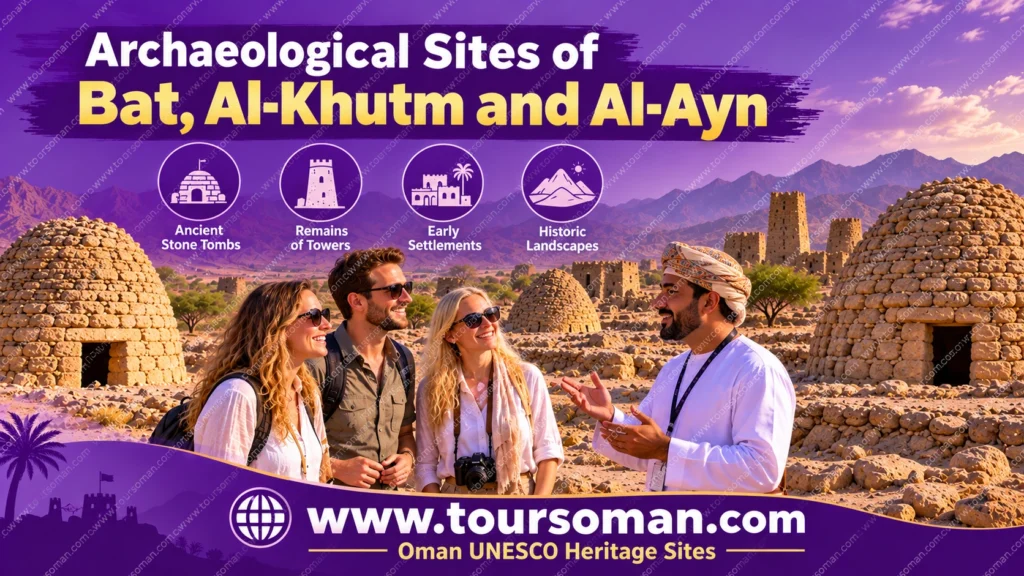
Explore Oman’s UNESCO Heritage Sites at Bat, Al-Khutm and Al-Ayn with ToursOman.
If you enjoy ancient history, the archaeological sites of Bat, Al-Khutm and Al-Ayn offer a fascinating glimpse into life in Oman thousands of years ago.
These sites contain settlements, stone towers and burial monuments dating mainly to the third millennium BCE. They provide important evidence of early communities and their building traditions.
H3: What Will You See at These Archaeological Sites?
Visitors can discover:
- 🪦 Ancient stone tombs, including structures often described as beehive tombs.
- 🏰 Remains of towers and early settlements.
- 🏘️ Evidence of how communities organized their settlements.
- 🏜️ Rural landscapes that help visitors imagine life in ancient Oman.
Unlike a restored fort, these archaeological sites are mainly about the surviving remains and the stories they reveal.
H3: Who Should Visit Bat, Al-Khutm and Al-Ayn?
These sites are particularly suitable for:
- 🏛️ History and archaeology enthusiasts.
- 🌍 Travelers interested in ancient civilizations.
- 👨👩👧👦 Families with older children who enjoy learning about the past.
- 🧭 Visitors looking for cultural experiences beyond Oman’s main cities.
The sites are spread across separate locations, so allow enough time for driving and walking.
Make your visit easier: Consider including these archaeological sites in a planned interior Oman journey rather than trying to visit them during a rushed transfer between destinations.
Browse Oman tours or contact ToursOman to discuss your preferred destinations and travel dates.
H2: Land of Frankincense: Explore Oman’s Ancient Trade Routes
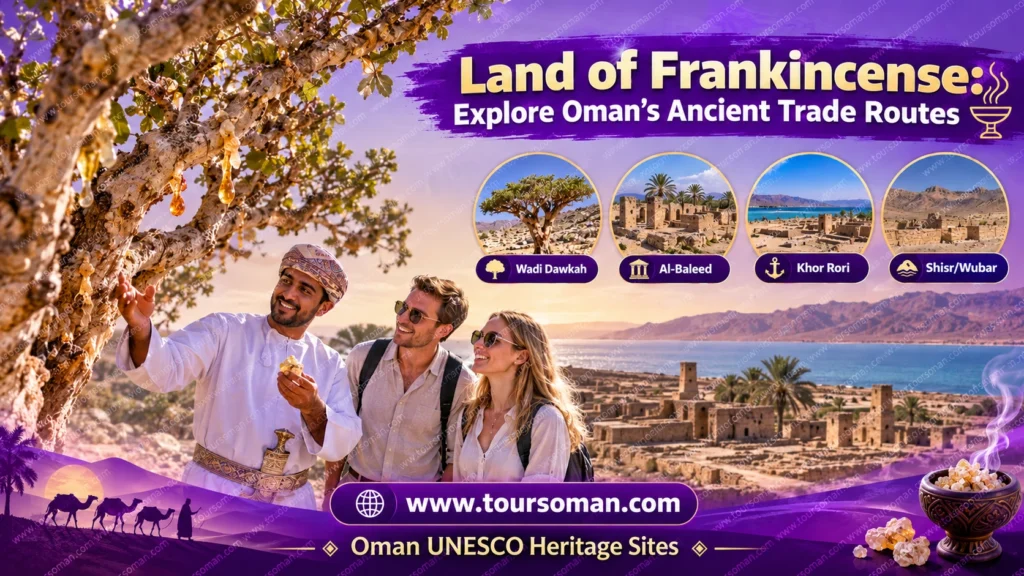
Explore Oman’s Land of Frankincense
The Land of Frankincense is one of the most interesting heritage experiences in southern Oman. It tells the story of a valuable natural product that connected Oman with distant markets and trading communities.
Frankincense is a fragrant resin collected from certain trees. For centuries, it has been used in religious ceremonies, traditional practices and other aspects of daily life.
The UNESCO-listed property includes four main components: Wadi Dawkah, Shisr/Wubar, Khor Rori and Al-Baleed. Together, they provide evidence of the frankincense trade and the settlements and ports that supported it.
H3: The Four Components of the Land of Frankincense
| 📍 Location | ✨ What Makes It Special |
| 🌳 Wadi Dawkah | Frankincense trees growing in their natural setting |
| 🏛️ Al-Baleed | Archaeological remains of a historic coastal settlement |
| ⚓ Khor Rori | Remains of an ancient port connected with the frankincense trade |
| 🏜️ Shisr/Wubar | Inland archaeological remains associated with historic trade routes |
Together, these locations help explain how frankincense was produced, transported and traded.
H3: How Much Time Should You Spend Exploring the Land of Frankincense?
If you are staying in Salalah, consider planning a full day for selected heritage sites. The exact duration depends on which locations you visit, your starting point and the time spent at each stop.
Al-Baleed and Khor Rori are particularly interesting for travelers who enjoy archaeology. Wadi Dawkah provides a closer connection with the frankincense trees themselves.
Because these locations are spread across the region, planning your route in advance can help reduce unnecessary driving.
H3: Can You Combine Heritage with Other Salalah Attractions?
Yes. You can plan your holiday around heritage sites and add beaches, mountain scenery or other natural attractions, depending on your schedule.
Explore Salalah day tours to find suitable options for your stay.
Booking tip: Ask which components of the Land of Frankincense are included in your excursion. A tour focused on one or two locations may not cover all four.
H2: Aflaj Irrigation Systems of Oman: Understand Traditional Omani Life
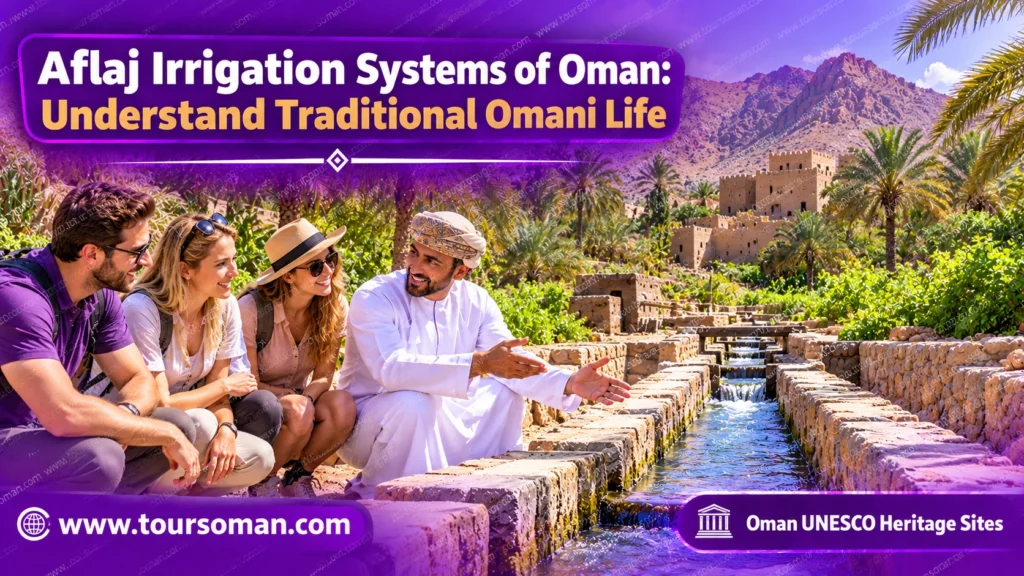
Discover the Aflaj Irrigation Systems of Oman
Oman’s heritage is not limited to forts and ancient cities. The Aflaj Irrigation Systems of Oman reveal how communities developed ways to manage water in a dry environment.
An aflaj is a traditional irrigation channel that carries water to farms, palm groves and settlements. These systems demonstrate the knowledge and cooperation required to make limited water resources useful to entire communities.
UNESCO inscribed the Aflaj Irrigation Systems of Oman in 2006. The listed property represents five selected irrigation systems.
H3: Why Are the Aflaj Systems Important?
- 🌴 Farming: They support agriculture and traditional palm groves.
- 🤝 Community Life: Water distribution depends on local knowledge and shared arrangements.
- 🛠️ Traditional Skills: The systems show how people managed water over generations.
- 🏛️ Cultural Heritage: Irrigation helped shape settlement patterns and everyday life.
H3: What Should You Expect During a Visit?
Depending on the location, you may see water channels, palm groves, agricultural land and nearby traditional villages.
The experience is different from visiting a large monument. Its value lies in understanding how people adapted to their environment and developed practical solutions for daily life.
Remember that not every irrigation channel in Oman belongs to the UNESCO-listed property. Confirm the specific location if seeing a listed component is important to you.
For a broader cultural holiday, consider combining irrigation heritage with Nizwa tours and other interior attractions. Browse Oman packages to explore possible multi-stop arrangements.
H2: Ancient City of Qalhat: Discover a Historic Coastal Trading Centre
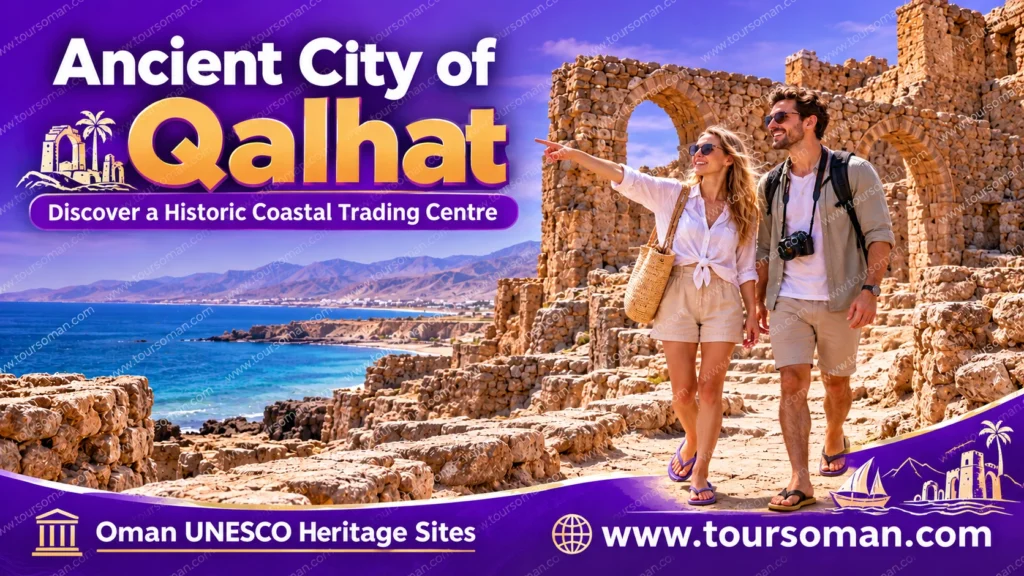
Discover the Ancient City of Qalhat, a UNESCO World Heritage Site
Qalhat is a fascinating destination for travelers interested in coastal history and Oman’s links with international trade.
Located on Oman’s eastern coast, the Ancient City of Qalhat was once an important trading Centre. Its remains provide evidence of connections between Oman and wider Indian Ocean trading networks.
UNESCO added Qalhat to the World Heritage List in 2018.
H3: What Makes Qalhat Different?
Unlike Bahla Fort, which is associated with defensive architecture, Qalhat tells a story about maritime trade and coastal connections.
Visitors can discover:
- 🏛️ Archaeological remains of the historic city.
- 🌊 The relationship between the settlement and the sea.
- ⚓ Evidence of the area’s historical trading importance.
- 🏺 Historic structures and the surrounding coastal landscape.
H3: How Can You Visit Qalhat?
Qalhat is best considered as part of an eastern-coast journey rather than an isolated trip from a distant city.
Your travel time will depend on where you start, and which other stops you include. Check access arrangements before departure, as archaeological areas may have restrictions.
For a longer holiday, compare Oman tour packages and available Oman tours to plan your journey.
H2: Which UNESCO Sites in Oman Should You Visit First?
The best site for you depends on your interests, available time and starting location.
| 🎯 Your Main Interest | 🏛️ Recommended Site | 🧭 Suggested Travel Style |
| 🏰 Traditional forts and architecture | Bahla Fort | 🚗 Interior cultural trip |
| 🪦 Ancient tombs and archaeology | Bat, Al-Khutm and Al-Ayn | 🔎 Archaeology-focused journey |
| 🌳 Frankincense and ancient trade | Land of Frankincense | 🌴 Salalah heritage trip |
| 💧 Traditional farming and water management | Aflaj Irrigation Systems | 🌾 Cultural tour |
| ⚓ Coastal trading history | Ancient City of Qalhat | 🌊 Eastern-coast road trip |
H3: Best Choice for a Short Holiday
If you have only two or three days, focus on one region rather than trying to visit every UNESCO property.
- Staying in Salalah? Focus on the Land of Frankincense and the heritage of Dhofar.
- Staying in Muscat? Plan an interior journey or explore the eastern coast, depending on your interests.
- Taking a longer holiday? Consider a multi-day itinerary connecting different regions.
H3: Should You Book a Private Tour or a Group Tour?
| 🧭 Tour Type | ⭐ Main Advantage | ⚠️ Important Consideration |
| 🚙 Private Tour | 🗓️ Greater flexibility over stops and timing | 💰 Often costs more overall |
| 👥 Shared Group Tour | 💵 May cost less per person | ⏰ Usually follows a fixed schedule |
| 🏨 Multi-Day Package | 🗺️ Connects distant destinations with overnight stays | 🍽️ Check accommodation and meals |
| 🚗 Self-Drive Trip | 🛣️ More freedom to change plans | 📍 You manage navigation and driving |
Choose the option that fits your budget, group size and preferred travel style.
Ready to plan your route? Visit ToursOman or contact the team with your travel dates and preferred sites.
H2: How to Plan Oman Heritage Tours Without Wasting Time
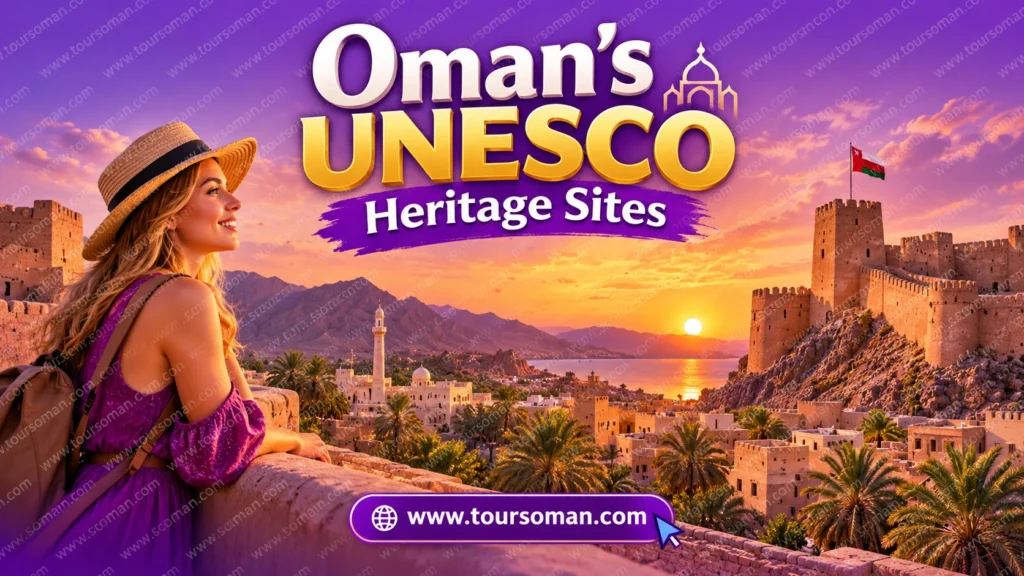
Oman’s heritage at golden hour
A heritage holiday can be memorable, but good planning is essential because some sites are far apart.
H3: 1. Choose Your Starting City
Your starting point determines which sites are practical to visit.
- Muscat: A useful base for exploring the capital and arranging journeys into the interior.
- Nizwa and the interior: Suitable for traditional forts, towns and archaeological remains.
- Salalah: The main base for exploring the Land of Frankincense and Dhofar.
Explore Muscat tours with local guides or Salalah day tours to plan your regional experience.
H3: 2. Decide How Much Time You Have
| ⏳ Available Time | 🗺️ Suggested Plan |
| 🌤️ Half a Day | 📍 One nearby attraction, if travel time permits |
| ☀️ One Full Day | 🏛️ One main heritage area and selected nearby stops |
| 🚙 Two to Three Days | 🏺 A regional heritage trip |
| 🧳 Four to Seven Days | 🏨 A wider itinerary with overnight stays |
These are planning estimates, not confirmed tour schedules.
H3: 3. Check What Is Included in the Price
Before booking, ask whether the tour includes:
- 🚐 Hotel pickup and drop-off.
- 🚙 Private or shared transport.
- 🧑🏫 Guide services.
- 🎟️ Entrance fees, where applicable.
- 🍽️ Meals and drinking water.
- 🏨 Overnight accommodation for multi-day tours.
- 💰 Additional charges or activities.
Prices vary according to the route, group size, travel dates and services provided. Request a quote based on your actual itinerary rather than relying on a general estimate.
Check Oman packages and the latest ToursOman offers.
H3: 4. Choose a Suitable Time of Year
Cooler months are generally more comfortable for outdoor sightseeing, especially when walking around forts and archaeological sites.
Regardless of the season:
- 🌅 Start outdoor visits early when practical.
- 💧 Carry drinking water and sun protection. ☀️
- 👟 Wear comfortable walking shoes.
- 🌤️ Check the weather and open arrangements.
- 🚗 Allow enough time to drive between locations.
H3: 5. Ask About Cancellation and Changes
Before confirming your booking, check the cancellation deadline, refund conditions and whether you can change your itinerary.
These terms depend on the specific tour, so confirm them directly with the provider.
For general assistance, visit the ToursOman FAQ page or contact the team.
H2: Suggested Itineraries and Booking Tips
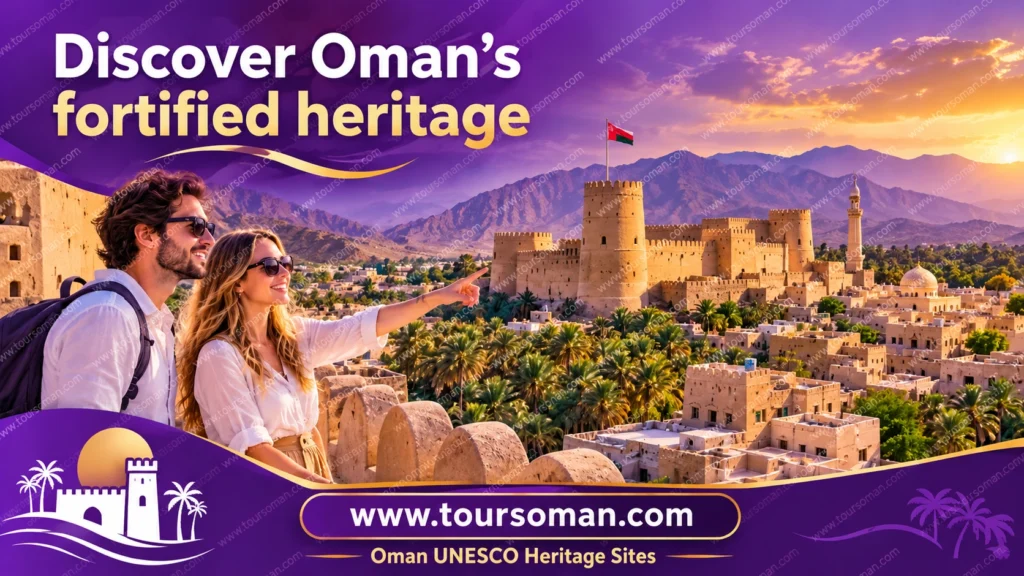
History among Oman’s mountains
Here are three sample itineraries to help you decide how to organize your holiday.
H3: Interior Oman Heritage Trip — 2 to 3 Days
Visit Bahla Fort and explore selected historic towns and cultural attractions in the interior. If time and transport permit, consider archaeological sites near Ibri.
Best for: Travelers interested in architecture, ancient settlements and traditional Omani culture.
Explore: 2-Day Oman Tour Package | Tour Daliah
H3: Salalah Frankincense Heritage Trip — 1 to 2 Days
Focus on Al-Baleed, Khor Rori and Wadi Dawkah. Select the stops according to your arrival time, interests and transport arrangements.
Best for: Travelers interested in archaeology, ancient trade and frankincense.
Explore Salalah city tour.
H3: Eastern-Coast History Trip — 1 to 2 Days
Include Qalhat as part of a wider eastern-coast journey, allowing sufficient time for driving and additional sightseeing.
Best for: Travelers interested in maritime history and coastal landscapes.
Explore 2-Day Oman Tour | Tour Fatima
H3: A Practical Booking Example
Imagine a couple visiting Oman for four days who want to explore traditional forts and ancient trading routes.
Trying to visit all five UNESCO properties would make the holiday rushed. A better option would be to choose one region, book a suitable guided excursion and use the remaining time for nearby attractions.
If Frankincense history is their main interest and they are staying in Salalah, they could focus on the Land of Frankincense. If they are staying in Muscat and prefer traditional architecture, an interior itinerary might suit them better.
This is an illustrative example, not a report of an actual ToursOman customer booking.
The key lesson: Choose the experience first, then build the route around it.
H2: Other Historic Places in Oman Worth Adding to Your Trip
Oman has many historic attractions beyond the five properties currently on the UNESCO World Heritage List.
These places can add variety to your holiday, but it is important to distinguish between UNESCO-listed property and a historic attraction that is not currently inscribed on that list.
| 🏛️ Attraction | ✨ Why Visit? | 🗺️ Suggested Itinerary |
| 🏰 Nizwa Fort | Traditional architecture and local history | 🚗 Interior Oman |
| 🛍️ Historic Areas of Nizwa | Traditional markets, crafts and town life | 📍 Nizwa day trip |
| ⛰️ Jebel Shams | Mountain views and dramatic landscapes | 🥾 Mountain tour |
| 🏘️ Traditional Villages | Local architecture and rural life | 🚙 Cultural road trip |
| 🏯 Other Historic Forts | Different examples of Oman’s defensive architecture | 🧭 Regional heritage trip |
You can learn more about what Nizwa is known for, explore Why Oman is famous? or discover the best way to see Jebel Shams.
H3: What About UNESCO’s Tentative List?
UNESCO’s Tentative List includes properties that a country may consider for future nomination. Being on this list is not the same as being inscribed on the World Heritage List.
For the latest information, check the official UNESCO Tentative List for Oman.
H2: Discover Oman’s Heritage with a Well-Planned Tour
Oman’s UNESCO heritage sites reveal different parts of the country’s story, from traditional forts and ancient burial monuments to irrigation systems, historic ports and the frankincense trade.
The best way to experience them is to choose the sites that match your interests, allow enough time for travel and confirm what is included in your excursion.
Ready to plan your visit? Explore Oman tours with ToursOman or contact the team to discuss a suitable itinerary.
H2: Frequently Asked Questions
H3: How Many UNESCO World Heritage Sites Does Oman Have?
Oman has five properties on UNESCO’s World Heritage List: Bahla Fort, Bat, Al-Khutm and Al-Ayn, Land of Frankincense, Aflaj Irrigation Systems of Oman, and Ancient City of Qalhat.
H3: Which Is the Oldest UNESCO World Heritage Site in Oman?
Bahla Fort was inscribed in 1987, making it the earliest of Oman’s five listed properties by inscription year.
H3: Which UNESCO Heritage Site Is Best for First-Time Visitors?
Bahla Fort is a good choice for travelers interested in traditional architecture. The Land of Frankincense is especially interesting for visitors exploring Salalah and Dhofar.
H3: Can I Visit UNESCO Heritage Sites on a Day Tour?
Yes. Some sites can be visited on day tours, depending on your starting point and the distance involved. Visiting properties in different regions usually requires a longer itinerary.
Explore Muscat day tours or Salalah day tours.
H3: How Many Days Do I Need to Visit All Five UNESCO Properties?
Several days are more practical than trying to visit all five in one or two days. A longer holiday allows more time for driving and exploring each region.
H3: What Is the Best Time to Visit Oman’s Historic Sites?
Cooler months from October till May are generally more comfortable for outdoor sightseeing. Your ideal dates also depend on regional weather and your preferred activities.
H3: Are Entrance Fees Included in Oman Heritage Tours?
Not always. Confirm whether entrance fees, transport, guide services, meals and other costs are included before booking.
H3: Is a Local Guide Worth Booking?
A knowledgeable local guide can explain the history and cultural importance of each site. Guided transport can also make multi-stop journeys easier.
H3: Are All Historic Forts in Oman UNESCO-Listed?
No. Oman has many historic forts, but Bahla Fort is the one among the five properties currently inscribed on the World Heritage List. Other forts may be historically important without having UNESCO World Heritage status.
H3: How Can I Book an Oman Heritage Tour?
Choose your preferred region, travel dates and main attractions, then compare the available Oman tours and holiday packages.
You can contact ToursOman to confirm the itinerary, availability, price and services included before booking.