
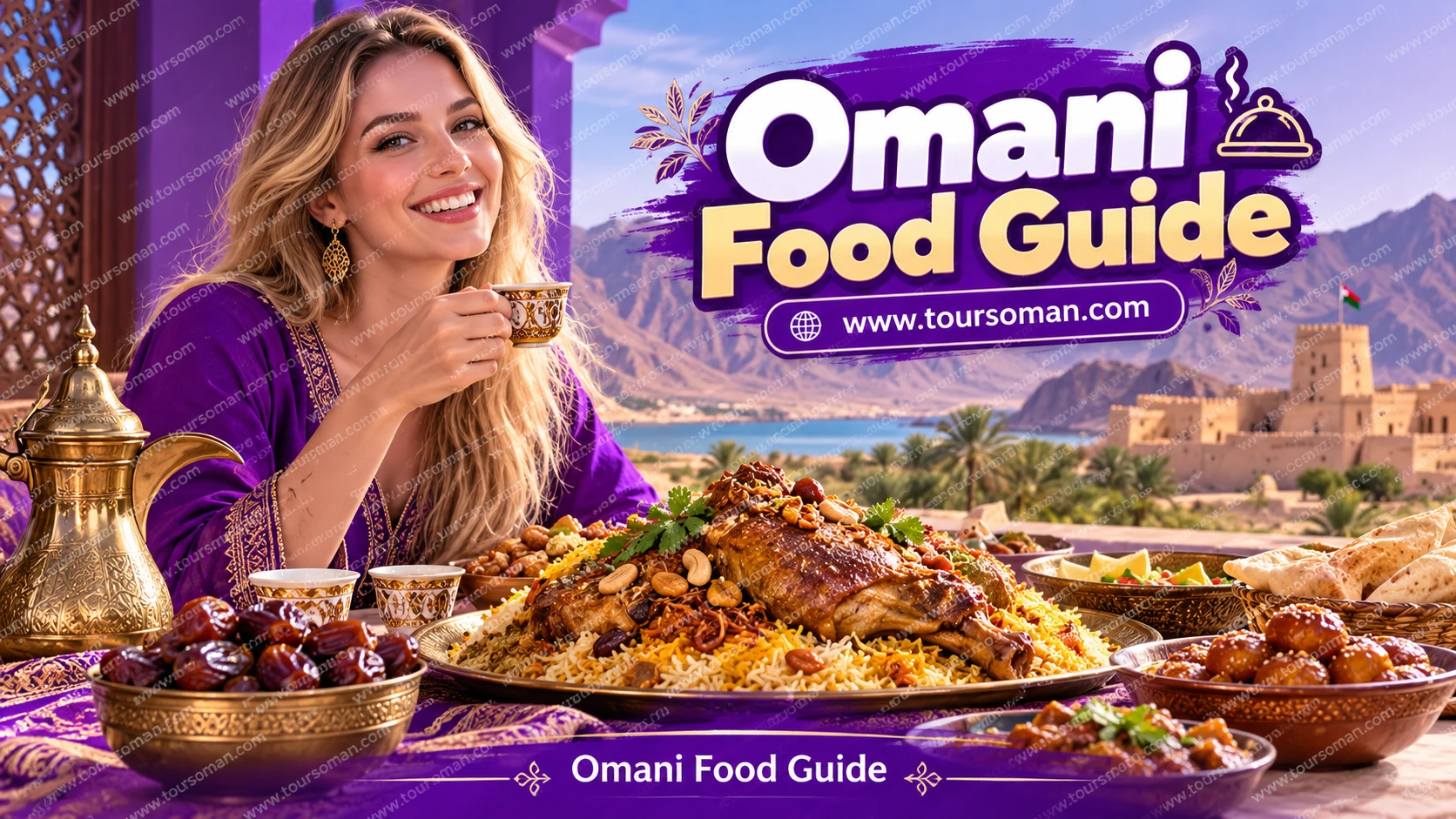
Omani Food Guide: 15 Traditional Foods Every Visitor Should Try
Oman is famous for its beautiful mountains, golden deserts, historic forts, and stunning coastline. However, there is another important part of the country that every visitor should discover: its traditional food.
From slow-cooked meat and fragrant rice to freshly grilled fish, sweet halwa, and aromatic coffee, Omani cuisine offers a wonderful introduction to local culture and hospitality.
If you are visiting Oman for the first time, you may wonder which dishes are worth trying, where to find authentic local meals, and how much you should budget for food.
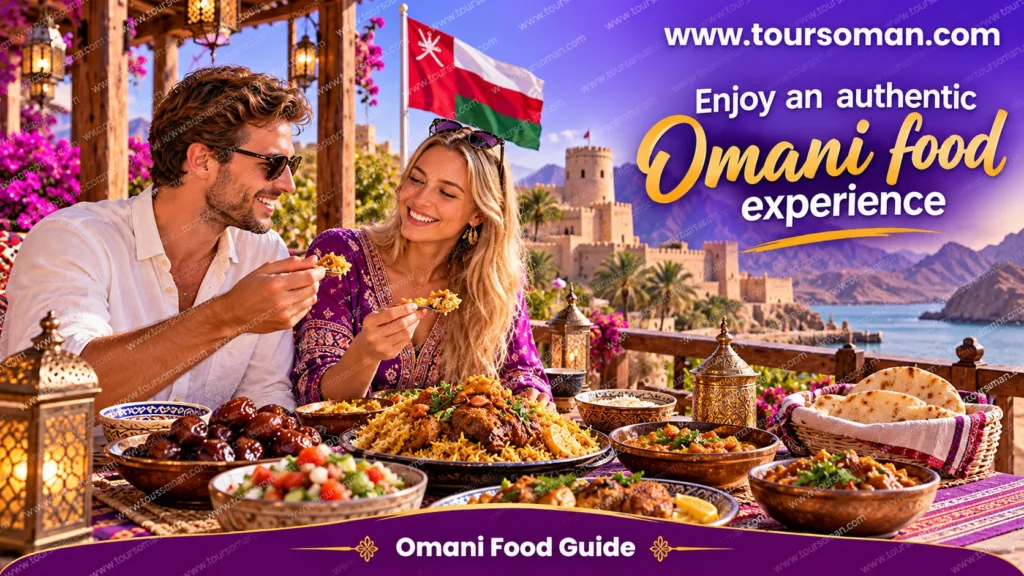
Enjoy an authentic Omani food experience
This Omani Food Guide introduces 15 traditional foods and drinks, explains what they taste like, and helps you choose dishes that match your preferences.
Whether you enjoy meat, seafood, vegetarian meals, or sweet desserts, there is something here to add to your travel experience.
You can also combine local food discoveries with sightseeing by exploring Oman tours and planning an itinerary that includes cultural attractions, traditional markets, and opportunities to enjoy local hospitality.
H2: What Makes Omani Cuisine Special?
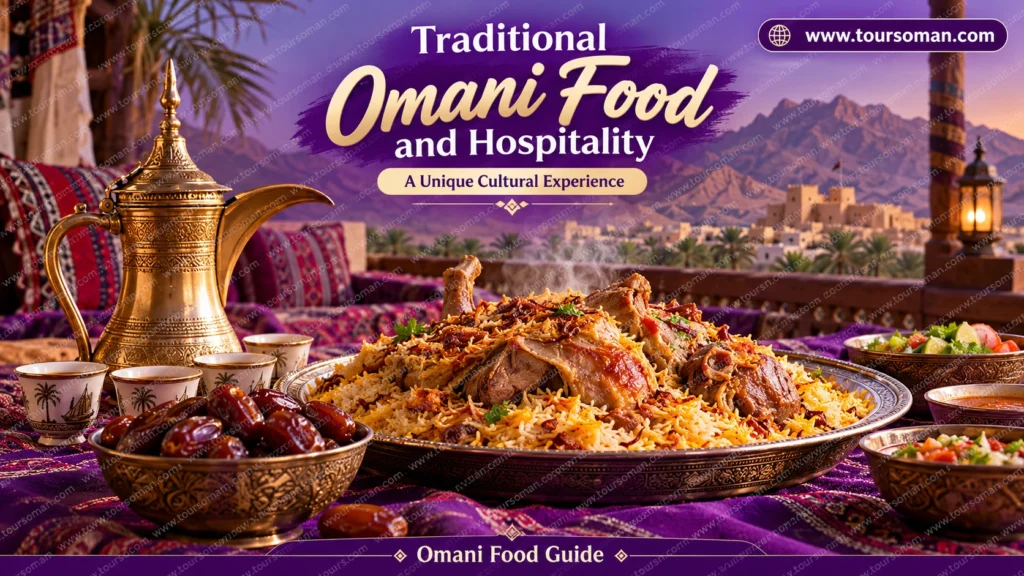
Traditional food and hospitality in Oman
Omani cuisine reflects the country’s history, geography, and connections with other parts of the world. Its location along important maritime trade routes helped introduce different spices, ingredients, and cooking traditions.
Today, traditional Omani meals combine local ingredients with cooking methods passed down through generations.
H3: 1. Aromatic spices
Cardamom, cinnamon, cloves, saffron, and dried lime are used in various dishes. These ingredients add rich aromas and flavor without necessarily making the food very hot.
H3: 2. Rice, meat, and seafood
Rice dishes served with lamb, chicken, or fish are common choices. Coastal communities have a strong connection with seafood, while meat dishes often feature in family gatherings and celebrations.
H3: 3. Traditional hospitality
Offering guests dates and coffee is an important part of Omani hospitality. Traditional sweets, especially Omani halwa, are also served during visits and special occasions.
H3: 4. Different regional food traditions
Food varies between coastal areas, inland towns, and southern Oman. Exploring different destinations can therefore introduce you to different ingredients and cooking styles.
If you want to discover more than the food alone, explore Muscat day tours or consider a longer itinerary through Oman holiday packages.
Before booking, ask whether meals or food stops are included, as this depends on the individual tour.
H2: 15 Traditional Omani Foods to Try
The following dishes and drinks are excellent starting points for discovering traditional Omani cuisine. Availability varies by restaurant and region, so ask about local specialties when ordering.
H3: 1. Shuwa – Traditional Slow-Cooked Meat
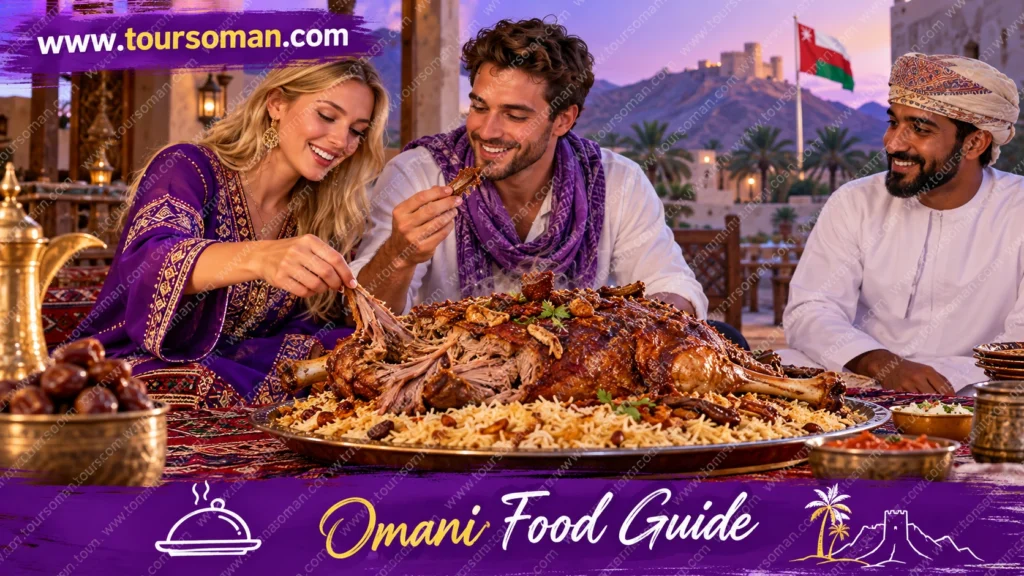
Discover shuwa, Oman’s traditional slow-cooked meat dish
Shuwa is one of Oman’s best-known traditional dishes. It is usually prepared with lamb or goat marinated in a mixture of spices, wrapped, and cooked slowly in an underground oven.
The cooking process can take a long time, sometimes up to two days, allowing the meat to become tender and absorb the flavors of the marinade.
Shuwa is strongly associated with celebrations, including Eid, and is often prepared for sharing with family and friends.
What does shuwa taste like?
Shuwa has a rich, savory flavor with warm spices and tender meat. It is commonly served with rice, making it a satisfying main meal.
Why try it?
- 🇴🇲 It is an important part of Oman’s food traditions.
- 🍖🔥 The slow cooking creates a distinctive texture and flavor.
- 😋🥩 It is an excellent choice for travelers who enjoy traditional meat dishes.
Travel tip: Shuwa may not be available every day because of its preparation time. Contact the restaurant before visiting if tasting it is a priority.
You can explore Oman tours and ask ToursOman whether your itinerary can include a suitable traditional dining stop.
H3: 2. Majboos – Fragrant Rice with Meat or Chicken
Majboos, also known in some places as makbous, is a popular rice dish prepared with chicken, lamb, or other meat.
The rice is cooked with aromatic spices such as cardamom, cinnamon, cloves, and sometimes saffron or dried lime. The exact recipe varies between cooks and restaurants.
Majboos is a good choice for visitors who want to experience local flavors while enjoying familiar ingredients.
Why should you try majboos?
- 🍽️ It is filling and suitable for lunch or dinner.
- 🍗🥩 Chicken and meat versions may be available.
- 🌿🌶️ The spices provide flavor without necessarily making the dish hot.
- 🍚🇴🇲 It is a practical introduction to traditional Omani rice dishes.
If you are spending the day exploring Muscat, plan enough time for a relaxed meal between attractions. Browse Muscat day tours and check the itinerary before booking.
H3: 3. Mashuai – Grilled Fish with Rice
Mashuai is a traditional seafood dish commonly associated with grilled kingfish served with lemon-flavored rice.
Fish has long been important to Oman’s coastal communities, and mashuai offers a different experience from the country’s meat-based meals.
The combination of grilled fish, rice, and citrus flavors makes it an appealing choice for seafood lovers.
What should you know before ordering?
- 🐟 Ask which fish is available.
- 🦴 Check whether the fish contains bones.
- 🌶️🥣 Ask about sauces and seasoning if you prefer mild flavors.
- 💰⚖️ Confirm the price before ordering seafood sold by weight.
Mashuai is worth considering when visiting coastal destinations. Explore Oman sea trips if you want to combine time on the water with coastal sightseeing. Confirm whether meals are included in your chosen trip.
H3: 4. Harees – A Traditional Wheat and Meat Dish
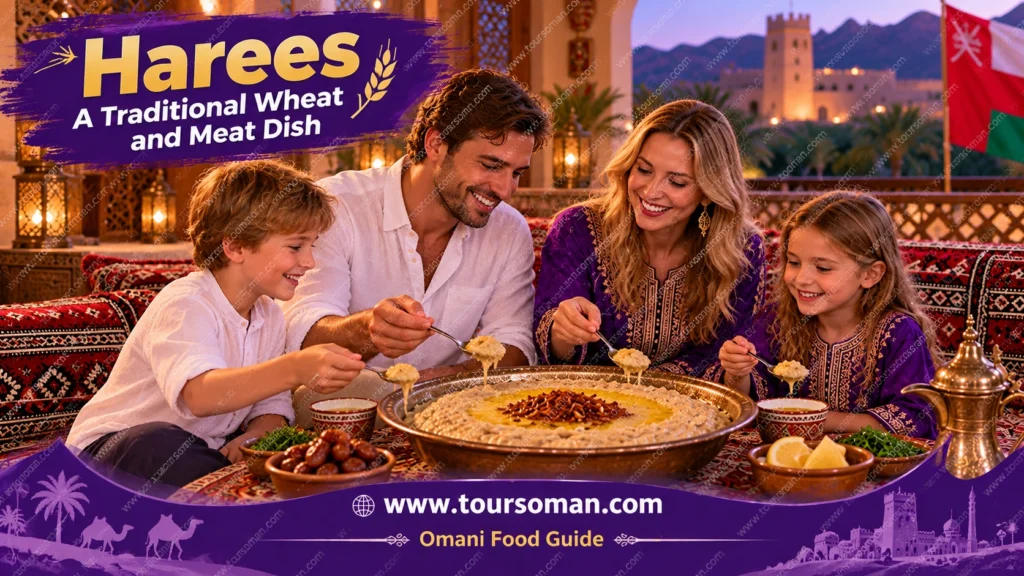
Enjoy traditional Omani Harees with your family and discover Oman’s rich food culture.
Harees is made with wheat, meat, and often ghee. The ingredients are cooked until soft and combined into a thick, smooth dish.
It is enjoyed in different parts of Oman and is particularly associated with Ramadan and festive occasions.
Unlike rice dishes with separate grains, harees has a soft texture and a mild, comforting flavor.
Who should try harees?
Harees is a good option for travelers who enjoy hearty meals and want to discover food associated with family traditions.
Before ordering, ask about the ingredients and preparation method, particularly if you have dietary restrictions.
Availability varies, so check with the restaurant if you specifically want to taste it.
H3: 5. Mishkak – Grilled Meat Skewers

Enjoy traditional Omani mishkak
Mishkak consists of pieces of marinated meat threaded onto skewers and grilled over charcoal. Depending on the vendor, the meat may be beef, lamb, or chicken.
The smoky aroma and grilled flavor make mishkak a popular choice for people who enjoy barbecue.
Why is mishkak worth trying?
- 😋🍢 It can be eaten as a snack or part of a larger meal.
- 🥗🍽️ It is convenient when you do not want a heavy restaurant meal.
- 🔥🇴🇲 It introduces you to local grilled-food traditions.
Mishkak is often associated with casual food stalls and local eating places.
Choose a clean, busy vendor and make sure the meat is cooked thoroughly. Ask about sauces before adding them, as some may be spicy.
H3: 6. Qabooli – Rice with Meat, Nuts, and Raisins
Qabooli is a filling rice dish that may include meat, nuts, raisins, and aromatic spices.
The combination of savory ingredients and mild sweetness creates a different flavor from simpler rice dishes.
Recipes vary, so the exact ingredients depend on the restaurant or household preparation.
What makes qabooli different?
Qabooli is particularly appealing to travelers who enjoy rice dishes with several textures and flavors.
If you have a nut allergy, ask about the ingredients before ordering. You can also check whether a chicken or another version is available.
H3: 7. Omani Bread – A Traditional Everyday Food
Bread is an important part of everyday meals in Oman. Different varieties are prepared across the country, with variations in thickness, texture, and ingredients.
Omani bread can be served alongside meat, stews, sauces, or other traditional foods.
How can you enjoy Omani bread?
- 🍲 Pair it with saloona or another stew.
- 🥩🔥 Enjoy it with grilled meat.
- 🫓 Ask whether freshly prepared bread is available.
- 😋🛍️ Try different varieties if you encounter them at local restaurants or markets.
Bread offers a simple way to experience everyday food traditions without needing to order a large meal.
H3: 8. Arsia – A Soft Traditional Dish
Arsia, also written as arsiya, is a traditional dish associated with festive meals and family cooking. Recipes may combine meat with grains and cook the ingredients until they form a soft mixture.
The exact preparation can vary, so it is worth asking a local restaurant how its version is made.
What should you ask before ordering?
If you want to compare arsia with harees, ask about the grains, meat, seasonings, and final texture.
This is especially useful if you have dietary restrictions or prefer certain ingredients.
Arsia is a good choice for travelers interested in discovering dishes that are less familiar than rice and grilled meat.
H3: 9. Madrouba – A Soft and Comforting Meal
Madrouba is a thick, soft dish that may be prepared with rice, chicken, and seasonings. The ingredients are cooked together until they become smooth or porridge-like.
Recipes vary, but the result is generally a hearty meal with a softer texture than most grilled dishes.
Who might enjoy madrouba?
- 🍲 Travelers who prefer soft-textured food.
- 🐟 Visitors looking for an alternative to grilled meat.
- 😋🍽️ People who enjoy comforting and filling meals.
Ask the restaurant whether the dish contains noticeable pieces of meat or rice, especially if texture is important to you.
H3: 10. Saloona – A Traditional Stew
Saloona is a stew that can be prepared with meat, chicken, fish, or vegetables. Tomatoes, onions, and spices often form the base.
It is commonly served with rice or bread and provides a useful alternative to dry rice dishes or grilled foods.
What makes saloona a good choice?
The ingredients can vary, making it worth asking about the version available that day.
If you prefer a vegetarian meal, confirm that the stew contains no meat, meat stock, or other animal-based ingredients.
Saloona is particularly appealing to visitors who enjoy warm, sauce-based meals.
H3: 11. Omani Halwa – A Famous Traditional Sweet
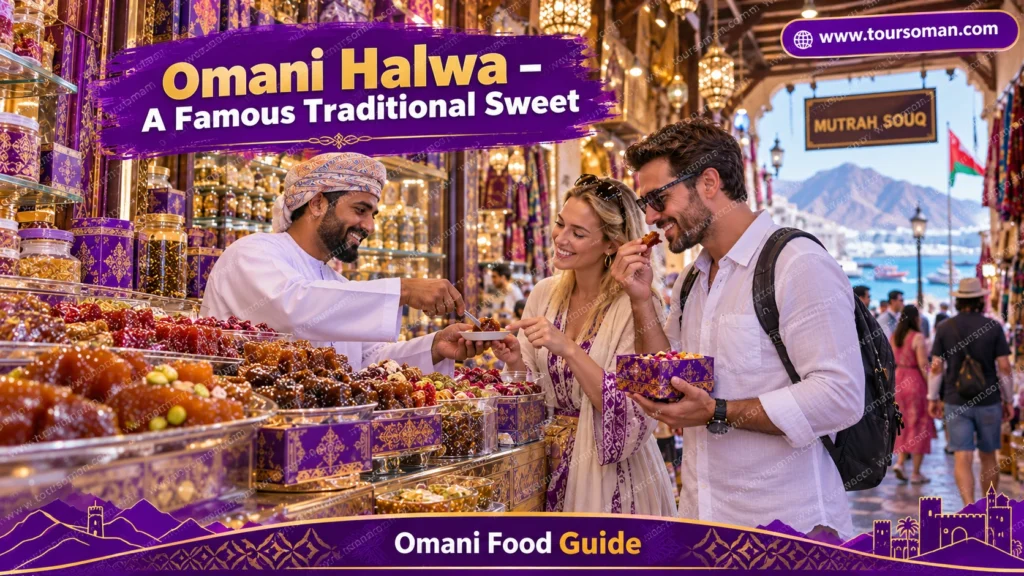
Discover traditional Omani halwa at Mutrah Souq in Muscat
Omani halwa is one of the country’s most recognizable traditional sweets. It is generally prepared with sugar, starch, ghee, and flavorings such as cardamom, saffron, and rosewater. Some varieties contain nuts.
The ingredients are cooked slowly until the mixture becomes thick, glossy, and sticky.
How is Omani halwa served?
Halwa is often offered to guests alongside traditional coffee and dates. It is associated with hospitality, celebrations, and special visits.
Tips for trying or buying Halwa
- 🍬😋 Ask about different flavors and ingredients.
- 🥜⚠️ Check whether the variety contains nuts.
- 🎁📦 Ask about packaging if you plan to take some home.
- 🍯🤏 Try a small portion first because it is rich and sweet.
A traditional market visit as Mutrah Souq in Muscat can be a good opportunity to discover local sweets and products. Plan your sightseeing through ToursOman and ask whether a market stop is possible within your itinerary.
H3: 12. Luqaimat – Small Sweet Fried Bites
Luqaimat are small balls of fried dough that are often served with syrup or another sweet topping.
They are enjoyed in different parts of the region and can be found in various forms in Oman.
Their crisp outside and soft center make them a pleasant snack or dessert.
When should you try luqaimat?
Try them as an afternoon snack, after a meal, or during a local celebration.
Ask about the toppings and ingredients if you have dietary restrictions. Recipes and serving styles vary between vendors.
H3: 13. Dates – A Traditional Favorite
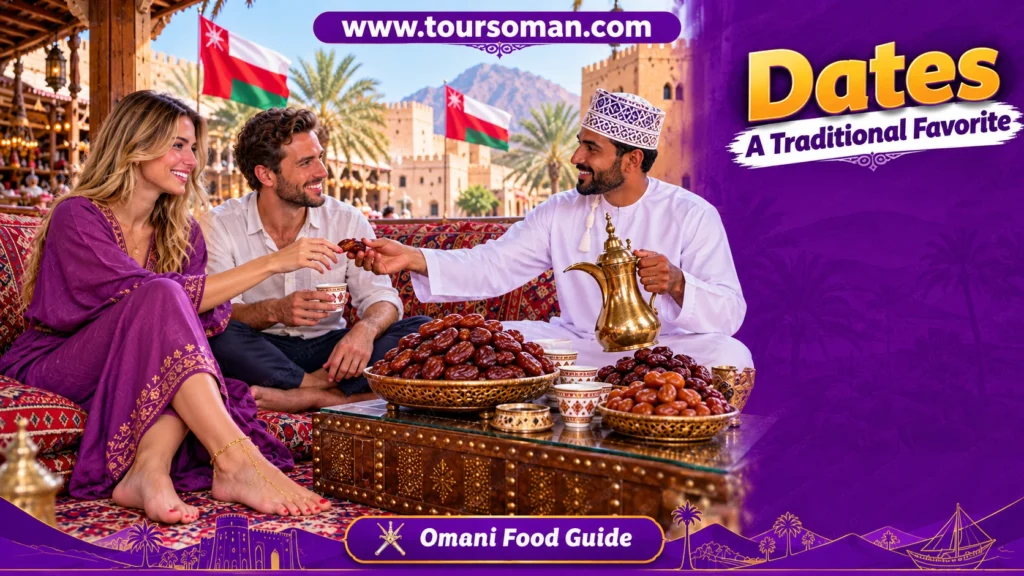
Dates – A Traditional Favorite
Dates are closely connected with Omani hospitality and everyday life. They are commonly offered to guests and served with coffee.
Different varieties vary in sweetness, size, softness, and texture.
How can visitors enjoy Omani dates?
- ☕🌴 Taste them with traditional Omani coffee.
- 🛍️😋 Explore different varieties at a local market.
- 🌴📍 Ask about the origin of the dates.
- 🎁📦 Consider buying a packaged selection as a gift.
When buying dates, check the packaging and storage instructions, particularly if you plan to travel with them for several days.
Dates are a simple but meaningful introduction to Oman’s food traditions.
H3: 14. Omani Coffee – A Symbol of Hospitality
Omani coffee, often called kahwa, is commonly flavored with cardamom and may include saffron or other aromatic ingredients.
It is usually served in small cups and is often accompanied by dates or halwa.
What does Omani coffee taste like?
Its flavor is aromatic and can differ from the stronger, milk-based coffee drinks familiar to many visitors.
Coffee is also important because of the way it is served. Offering coffee to guests is a traditional expression of hospitality.
A simple cultural tip
If someone offers you coffee in a traditional setting, accepting a small cup is a friendly way to participate in local hospitality. You can politely indicate when you have had enough.
You do not need to know every local custom before your trip. Showing respect and asking questions when unsure are good ways to learn.
H3: 15. Laban – A Refreshing Yogurt Drink
Laban is a yogurt-based drink enjoyed in Oman and across the region. Depending on the variety, it may taste mildly sour, salty, or creamy.
It is commonly enjoyed with savory meals and can be a refreshing alternative to sweet drinks.
What should you check before ordering?
Ask about added salt, flavorings, or other ingredients if you have dietary needs.
Laban is not unique to Oman, but it complements many traditional meals and is useful to know when exploring local food options.
H2: Quick Comparison Table
If you have limited time in Oman, this table can help you choose which foods to try first.
| 🍽️ Traditional food | 🥘 Main ingredients | 😋 Flavor and texture | 👥 Best for |
| 🍖 Shuwa | Slow-cooked meat and spices | Rich and tender | 🥩 Meat lovers |
| 🍚 Majboos | Rice, meat or chicken, spices | Fragrant and savory | 🌍 First-time visitors |
| 🐟 Mashuai | Grilled fish and rice | Savory with citrus notes | 🦐 Seafood fans |
| 🥣 Harees | Wheat, meat, and ghee | Soft and hearty | 🇴🇲 Traditional food lovers |
| 🍢 Mishkak | Marinated meat | Smoky and grilled | 😋 Quick snacks |
| 🍛 Qabooli | Rice, meat, nuts, raisins | Savory with mild sweetness | 🍽️ Filling meals |
| 🫓 Omani bread | Flour and other ingredients | Varies by type | 🥖 Bread lovers |
| 🍲 Arsia | Meat and grains | Soft and rich | 🎉 Festive meals |
| 🍗 Madrouba | Rice, chicken, seasonings | Thick and smooth | ❤️ Comfort food |
| 🥘 Saloona | Meat, fish, or vegetables | Savory and moist | 🍲 Stew lovers |
| 🍮 Omani halwa | Sugar, starch, spices, ghee | Sweet and sticky | 🍬 Dessert lovers |
| 🍩 Luqaimat | Fried dough and sweet topping | Crisp outside, soft inside | 🍯 Sweet snacks |
| 🌴 Dates | Fresh or dried dates | Naturally sweet | 🎁 Snacks and gifts |
| ☕ Omani coffee | Coffee and aromatic spices | Fragrant | 🇴🇲 Cultural experiences |
| 🥛 Laban | Yogurt-based drink | Creamy and refreshing | 🍽️ Drinks with meals |
H2: Where to Try Traditional Omani Food

Make local food part of your Oman holiday
The best places to discover traditional food depend on your itinerary and the dishes you want to try. You can combine local meals with sightseeing rather than arranging a separate food trip.
H3: 1. Muscat – Traditional Restaurants and Markets
Muscat is a practical starting point for visitors who want to try local rice dishes, grilled meat, sweets, and coffee.
Traditional markets are also useful places to explore dates, halwa, and other local products.
Planning tip: Browse Muscat day tours and ask whether your preferred itinerary allows time for a traditional meal or market visit.
H3: 2. Nizwa – Food and Cultural Heritage
Nizwa offers opportunities to combine historic sights, local markets, and traditional Omani life.
A visit can be especially appealing if you want to discover the country’s inland culture as well as its food.
Explore the best things to do in Nizwa and allow time for a relaxed meal during your visit.
H3: 3. Coastal Areas – Fish and Seafood
Oman’s coastal areas are worth considering if you enjoy seafood. Ask local restaurants about the fish available that day and how it is prepared.
You can explore Oman sea trips if you want to combine time on the water with coastal sightseeing. Confirm whether food is included in the trip you select.
H3: 4. Salalah – Southern Omani Food Traditions
Salalah and the wider Dhofar region offer a different setting for exploring local produce, markets, and regional food traditions.
If your holiday includes southern Oman, browse Salalah day tours and ask whether a local food stop can fit into your sightseeing plan.
Food availability varies by location, season, and restaurant, so confirm specific dishes before making them the main reason for a visit.
H2: How Much Does Omani Food Cost?
Your food budget depends on where you eat, the ingredients you choose, portion sizes, and the type of restaurant.
A casual meal, a seafood restaurant, and a hotel dining experience can have very different prices. The table below provides relative budget guidance rather than fixed prices.
| 🍽️ Type of food experience | 💰 Relative budget | 😋 What to expect |
| 🫓 Local snack or bread | 💵 Lower | 🥨 A simple snack or small bite |
| 🍚 Casual rice or meat meal | 💵💵 Lower to moderate | 🍛 A filling everyday meal |
| 🐟 Grilled fish or seafood | 💵💵 Moderate | 🦐 Cost varies by fish and portion |
| 🇴🇲 Traditional restaurant meal | 💵💵 Moderate | 🍽️ More choice and a relaxed setting |
| 🏨 Hotel or premium dining | 💵💵💵 Higher | ✨ More formal service and surroundings |
| ☕🌴 Coffee, dates, or halwa tasting | 💰 Varies | 🍬 Depending on portion and product |
H3: How to avoid unexpected costs
- Check menu prices before ordering.
- Ask whether seafood is sold by weight.
- Confirm whether bread, rice, drinks, and side dishes are included.
- Check whether meals are part of your tour price.
- Ask about additional charges before confirming a booking.
If you are planning a full holiday, read how to book affordable Oman holiday packages online.
H2: How to Plan a Food Experience in Oman
You do not need to spend your entire holiday searching for traditional dishes. A few well-planned meals can fit naturally into a sightseeing trip.
H3: Choose the Right Experience for Your Travel Style
| ✈️ Travel style | 🗺️ Suggested approach | ✅ What to confirm |
| 🇴🇲 First visit to Oman | 🏛️🍽️ Combine sightseeing with a traditional meal | 🍴 Meal arrangements and stops |
| 🏙️ Short stay in Muscat | ⏰ Choose a city itinerary with time for local food | 🚌 Tour duration and route |
| 🏺 Culture-focused holiday | 🛍️ Visit a historic town or traditional market | 🧑🏫 Guide availability and time |
| 🐟 Seafood lover | 🌊 Plan time in a coastal destination | 💰 Restaurant options and prices |
| 👨👩👧👦 Family trip | 🍽️ Choose convenient meal stops with several choices | 🧒 Children’s options and dietary needs |
| 🚘 Private holiday | 🗓️ Ask about arranging meals around your schedule | 💵 Customization and additional costs |
H3: How Long Should You Allow?
As a practical planning guide, allow around 45–90 minutes for a relaxed restaurant meal, depending on the venue and group size.
A market visit or food-focused outing may require additional time. If you are joining a full-day tour, avoid scheduling too many stops. A comfortable itinerary is usually more enjoyable than rushing between attractions.
H2: What Should You Check Before Booking?
Before booking through ToursOman, confirm the details that matter to you.
- Duration: Is the trip a half-day tour, full-day tour, or multi-day package?
- Meals: Is lunch included, optional, or separate?
- Transport: Is transport included, and where does the trip start?
- Dietary needs: Can the operator help with vegetarian requests or food allergies?
- Group size: Is the experience private or shared?
- Cancellation: What cancellation or change of terms apply to your selected package?
- Total cost: Are meals, entry fees, and other extras included?
Checking these details before booking helps you understand what you will receive and avoid surprises during your trip.
H2: Is a Local Tour Guide Worth Considering?
A local guide can explain the history behind a dish, introduce you to regional traditions, and help you make the most of limited time.
This can be particularly helpful if you are unfamiliar with Oman or want to combine cultural attractions with local experiences.
Explore Muscat tours with local tour guides and contact ToursOman to ask whether food stops or tasting arrangements are available.
H2: A Simple One-Day Food and Sightseeing Plan
The following is an example itinerary, not a confirmed ToursOman package.
| ⏰ Time | 🗺️ Suggested activity | 🍽️ Food experience |
| 🌅 Morning | 🏛️ Explore cultural attractions or a local market | 🌴🍬 Discover dates and halwa |
| ☀️ Lunch | 🍴 Stop at a traditional restaurant | 🍚🥩 Try majboos, mashuai, or another local dish |
| 🌇 Afternoon | 📸 Continue sightseeing | ☕🍰 Enjoy coffee and a small sweet if available |
To turn this idea into a practical itinerary, browse Oman holiday packages and contact the ToursOman team to discuss your dates, interests, and meal preferences.
H2: Final Thoughts: Experience Oman Through Its Food
Traditional Omani food offers a simple way to connect with the country’s culture and hospitality.
Shuwa introduces you to the tradition of sharing special meals, majboos brings together fragrant rice and spices, mashuai highlights coastal cooking, and halwa and coffee offer a taste of Omani hospitality.
You do not need to try all 15 foods in one trip. Choose dishes that suit your taste, leave time to explore local markets, and ask questions about the food you encounter.
If you are planning a holiday, make food part of the journey rather than an afterthought.
Explore ToursOman’s available tours, compare Oman holiday packages, or contact the ToursOman team to discuss an itinerary that suits your dates and interests.
A well-planned trip can bring together Oman’s landscapes, history, local hospitality, and memorable meals.
H2: Frequently Asked Questions about Omani food
H3: What is the most famous traditional food in Oman?
Shuwa is one of Oman’s best-known traditional dishes. It consists of meat marinated with spices and cooked slowly in an underground oven. It is strongly associated with celebrations and family gatherings.
H3: What food should I try first in Oman?
Majboos is a good starting point if you enjoy rice and meat or chicken. You could also try mishkak for grilled meat, mashuai for seafood, and halwa with coffee for a traditional sweet experience.
H3: Is Omani food very spicy?
Not necessarily. Many dishes use spices for aroma and flavor rather than intense heat. However, recipes vary, so ask whether a dish or sauce is spicy if you prefer mild food.
H3: Is Omani food suitable for vegetarians?
Some breads, vegetable stews, and other dishes may be suitable, but many traditional meals contain meat, meat stock, or ghee. Ask about the ingredients and cooking method before ordering.
H3: What desserts should I try in Oman?
Start with Omani halwa, then try luqaimat if you enjoy sweet fried dough. Dates are also worth tasting, particularly alongside traditional coffee.
H3: What is traditionally served with Omani coffee?
Omani coffee is commonly served with dates and may also be accompanied by halwa. Offering these to guests is an important part of traditional hospitality.
H3: Where can I try traditional Omani food in Muscat?
Look for restaurants serving local dishes and explore traditional market areas for products such as dates and halwa. Check menus before visiting because not every restaurant serves every dish.
You can also browse Muscat day tours and ask whether a traditional meal or market visit can fit into your itinerary.
H3: Can I try authentic Omani food on a guided tour?
Potentially, yes, depending on the itinerary. Ask the operator whether meals, local restaurants, or market visits are included. Do not assume that a standard sightseeing tour automatically includes food.
H3: How much should I budget for food in Oman?
Costs depend on the restaurant, ingredients, and portion size. Casual meals generally cost less than premium dining or some seafood meals. Check current menu prices and confirm whether food is included in your tour package.
H3: Is shuwa available every day?
Not necessarily. Shuwa takes a long time to prepare and is associated with celebrations and special gatherings. Some restaurants may serve it regularly but check availability before planning your meal around it.
H3: What is the best time to experience Omani food?
You can enjoy Omani cuisine throughout the year. Some traditional dishes may be more visible during festivals, family celebrations, and Ramadan. Check local opening hours and meal arrangements for your travel dates.
H3: Can I combine food experiences with sightseeing in Oman?
Yes. You can plan meals around city tours, historic destinations, market visits, and coastal trips. Explore Oman tours and holiday packages and discuss your interests with the operator.
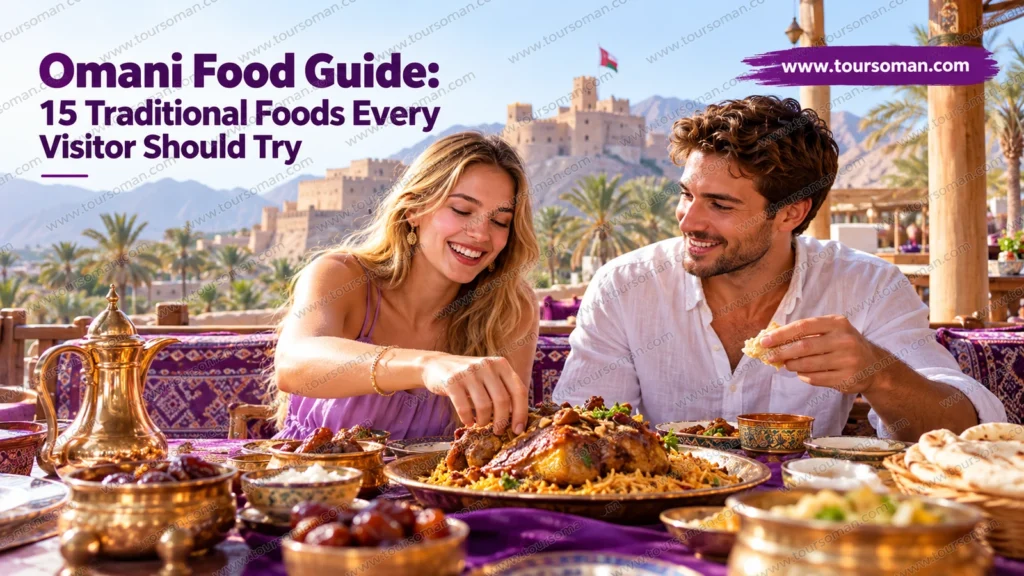
Omani food guide
Written by: Toursoman Author